
At a Turning Point: The Future of Coquille Fall Chinook
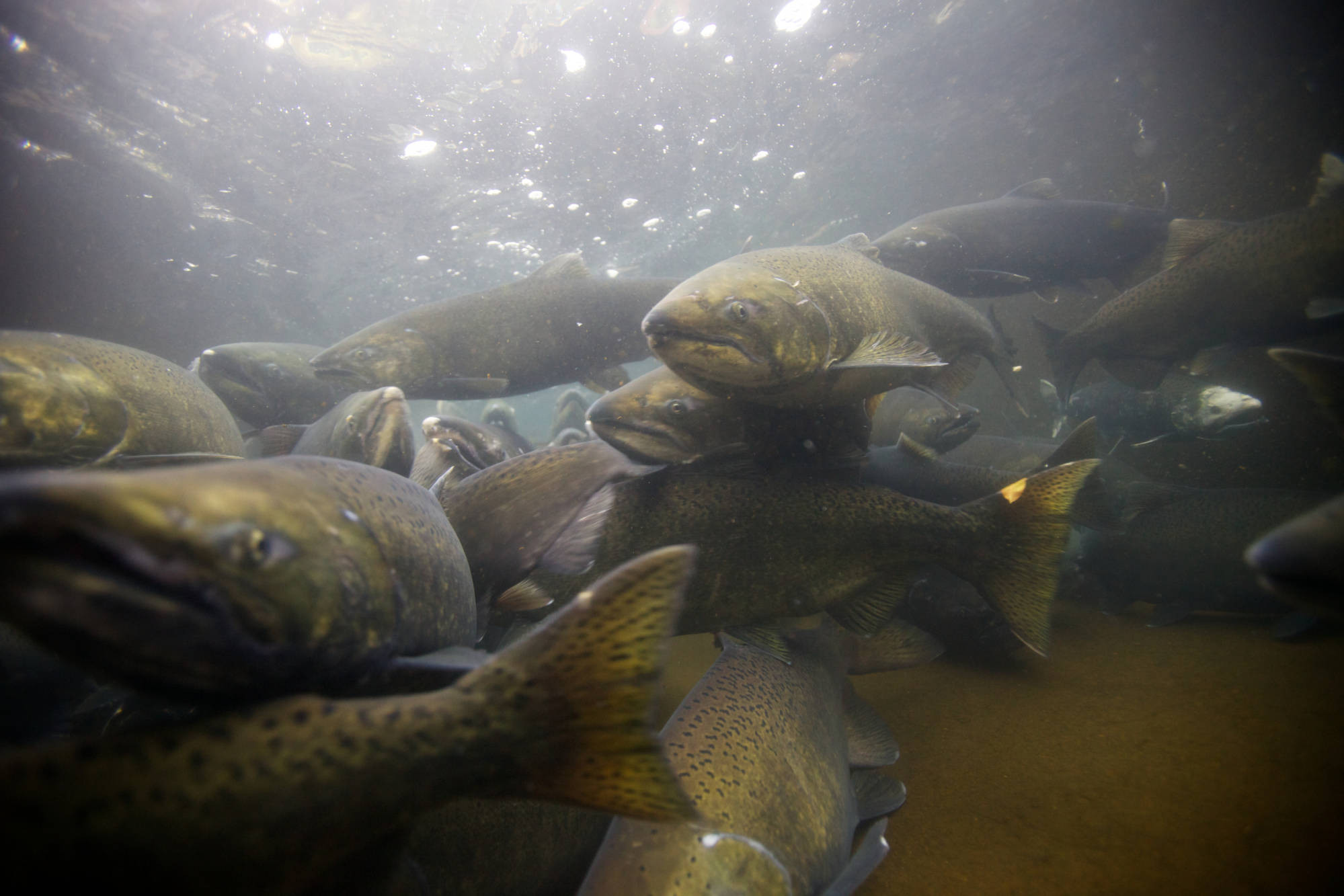 Spawning fall Chinook salmon | Photo Credit: Ryan Hagerty/USFWS
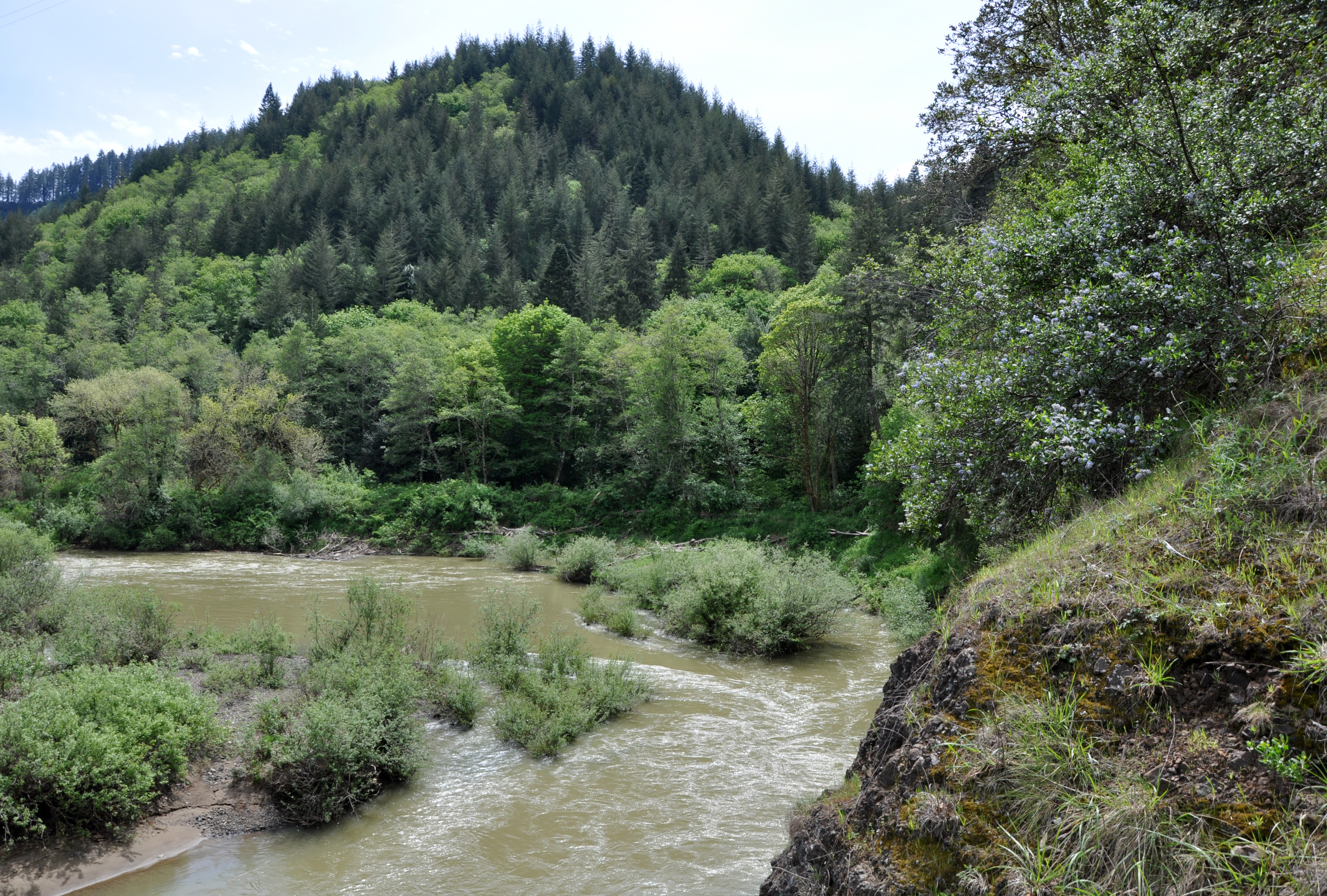
The Coquille River flows amid the coastal mountains of southwest Oregon – a storied watershed long celebrated by Indigenous communities, anglers, and conservationists alike. Today, however, its iconic fall Chinook salmon are facing a dramatic decline that has prompted urgent recovery actions.
The Coquille River begins where its North and South Forks join near Myrtle Point in Coos County and winds roughly 36 miles to the Pacific Ocean at Bandon. Its broader watershed stretches over roughly 1,059 square miles, making it one of Oregon’s largest coastal river basins. The river’s tributaries – including the North, Middle, South, and East Forks – historically offered rich spawning and rearing habitat for salmon and steelhead.
Until the early 2000s, wild adult returns of Coquille River fall Chinook averaged roughly 8,000–10,000 fish annually. However, beginning around 2018, these returns plummeted dramatically, with some years seeing as few as 275–900 returning adults.
The Conservation Hatchery Response
In 2022, responding to the sharp drop in wild fall Chinook, the Oregon Department of Fish and Wildlife (ODFW) and the Coquille Indian Tribe launched an emergency conservation hatchery program. Unlike classic harvest augmentation, this program focuses on preventing local extinction by capturing a small number of wild adult Chinook to serve as broodstock – adult fish collected to spawn in a hatchery and produce young fish. Fish produced through the conservation program are intended to supplement wild spawners and are not harvestable in Coquille fisheries.
Recently, ODFW approved a modification to the Coquille River Fall Chinook Conservation Hatchery Program. The conservation hatchery relies on natural-origin (NOR) broodstock to supplement naturally spawning populations of Chinook salmon. In the first four years (2022–2025), broodstock collection goals were met in only one year. However, in the other three years, an insufficient number of returning NOR females were captured, resulting in fewer than 10,000 eggs collected.
To help achieve their target release number and subsequently assess the program, ODFW staff, along with the Coquille Indian Tribe (CIT), proposed managing both the Coquille Fall Chinook Conservation Hatchery Program and the Coquille Fall Chinook Harvest Augmentation Hatchery Program as a single integrated stock that utilizes NOR and hatchery-origin (HOR) broodstock.
Native Fish Society’s Perspective
As we have stated before, Native Fish Society fully recognizes the dire status of Coquille fall Chinook and shares ODFW’s and the Coquille Tribe’s goal of rebuilding robust, self-sustaining populations of these fish that can support a harvest fishery.
We are not opposed to conservation hatchery programs when they are short-term and designed with strict safeguards to limit domestication and protect genetic diversity. However, we are concerned the current program does not meet those standards – particularly when operated alongside large augmentation hatchery programs in rivers with large predator pressures.
Hatchery Programs Feed Predators
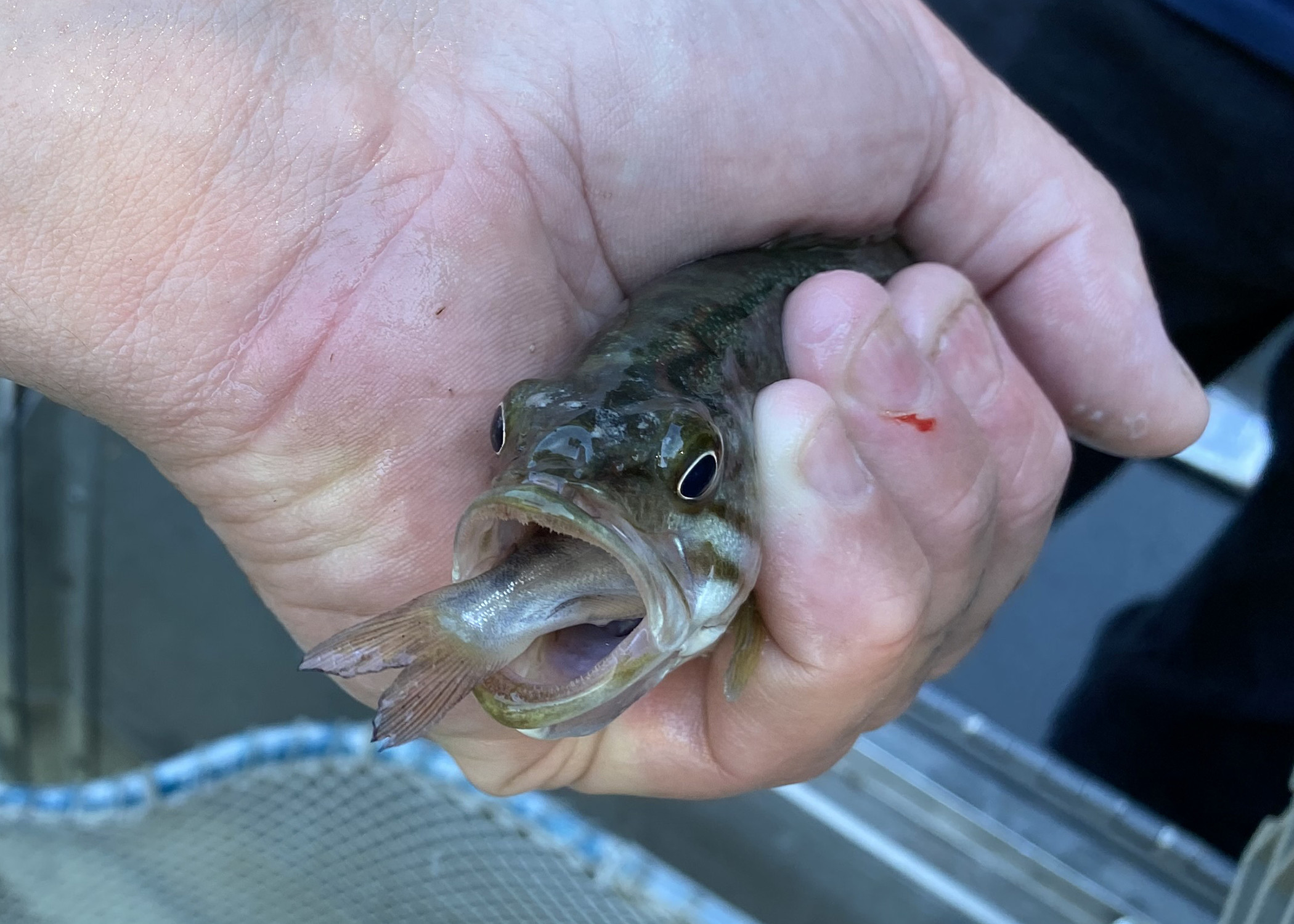
ODFW has identified the illegal introduction of smallmouth bass as a primary limiting factor in fall Chinook production, alongside warming river temperatures, low flows, and poor ocean conditions. The augmentation hatchery program may be worsening this predation problem and stalling Chinook recovery.
A 2018 study found that releasing hatchery-reared fall Chinook salmon resulted in a 30-fold increase in salmon consumption by non-native Smallmouth Bass (Erhardt and Tiffan 2018¹). Despite the removal of nearly 40,000 Smallmouth Bass by ODFW and the Coquille Tribe, that non-native population remains abundant and continues to cause significant harm to Chinook salmon populations.
We support ODFW’s efforts to remove these non-native predators in the Coquille, but question the validity of increasing food availability for those predators through large hatchery releases.
Native Fish Society asks that ODFW and the Coquille Tribe evaluate how the current augmentation hatchery program is contributing to increased predation from both Smallmouth Bass and Striped Bass.
Hatchery Impacts on Wild Fish
While recognizing the dire status of Coquille River wild fall Chinook, NFS has long presented the science showing that long-term hatchery impacts have net negative impacts on self-sustaining wild populations.
In 2023, a team of scientists led by John McMillan conducted a global literature search of peer-reviewed publications (1970–2021) evaluating how hatchery salmonids affected wild salmonids. They then developed a publicly available database and synthesized results. Of the 206 studies meeting their criteria, 83% reported adverse or minimally adverse effects on wild populations.
Documented adverse impacts include:
Genetic risks
Ecological competition
Predator attraction
Increased fishing pressure
Epigenetic effects (how genes are expressed)
Facility-related impacts
Only about 3% of hatchery programs were found to have beneficial effects on wild populations. Given this body of proven science, we ask ODFW to closely monitor outcomes and ensure augmentation programs are not directly impacting and undermining the goal of rebuilding naturally self-sustaining Chinook.
No Sunset Date for the Conservation Hatchery Program
NFS provided comments at the beginning of the conservation hatchery program (read full comments HERE), emphasizing that conservation hatcheries should be temporary and carefully evaluated. We commented:
"The purpose of a conservation hatchery is to provide temporary aid to sustain and begin to rebuild a population when the biological risk of extirpation or extinction is imminent. As such, they should be of limited duration and include tight sideboards to decrease domestication and reduce impacts to genetic diversity.
ODFW and the Coquille Tribe must include these considerations in the Operational Plan. For example, the plan must call for an in-depth evaluation of the status of the conservation hatchery plan within specified timeframes—for example, after three years of first-generation hatchery fish returning to spawn. Also, the Operational Plan must include a sunset period that is justified by the best available science in order to preserve and protect the remaining populations of wild fish in the basin."
While the conservation hatchery program has clear metrics for success (4 years at a minimum wild fish average of 2,833), there is still no clear metric for determining when the program is unsuccessful, nor is there a defined sunset date.
While we understand the need for hatchery-origin broodstock at the present time, we strongly urge ODFW to evaluate the program for its budgetary sustainability and effectiveness toward the goal of self-sustaining Chinook. NFS is asking that ODFW and the Coquille Tribe determine a sunset date on this hatchery-based strategy for recovering wild fall Chinook.
A Path Forward
A promising path forward may lie in lessons learned from the Oregon Coastal Coho Success Story or recovery and the "Recipe for Abundance" that brought them from collapse to comeback. Wild coho were even regulated for harvest in the Coquille in the fall of 2025.
For the recovery of Coquille fall Chinook, we recommend:
A small, short-duration conservation hatchery program (4–5 years maximum)
Reductions in ocean harvest of fall Chinook through Oregon regulations and Pacific Salmon Treaty negotiations
Significant investment in watershed protection and habitat restoration
Continued and expanded predatory bass removal efforts
After this period, the hatchery program should be paused to allow a full generation of wild fish to return and to evaluate whether meaningful natural recovery of the wild fall Chinook population is occurring.
A recovery strategy grounded in habitat restoration, wild fish protection, and robust monitoring and science-based management offers the best chance for restoring truly self-sustaining Coquille fall Chinook populations for future generations.
Sources:
¹Erhardt JM, Tiffan KF. Post-release predation mortality of age-0 hatchery Chinook salmon from non-native smallmouth bass in the Snake River. Fish Manag Ecol. 2018;25:474–487. doi: 10.1111/fme.12322.