Oregon Legislative Update: We’re Halfway There
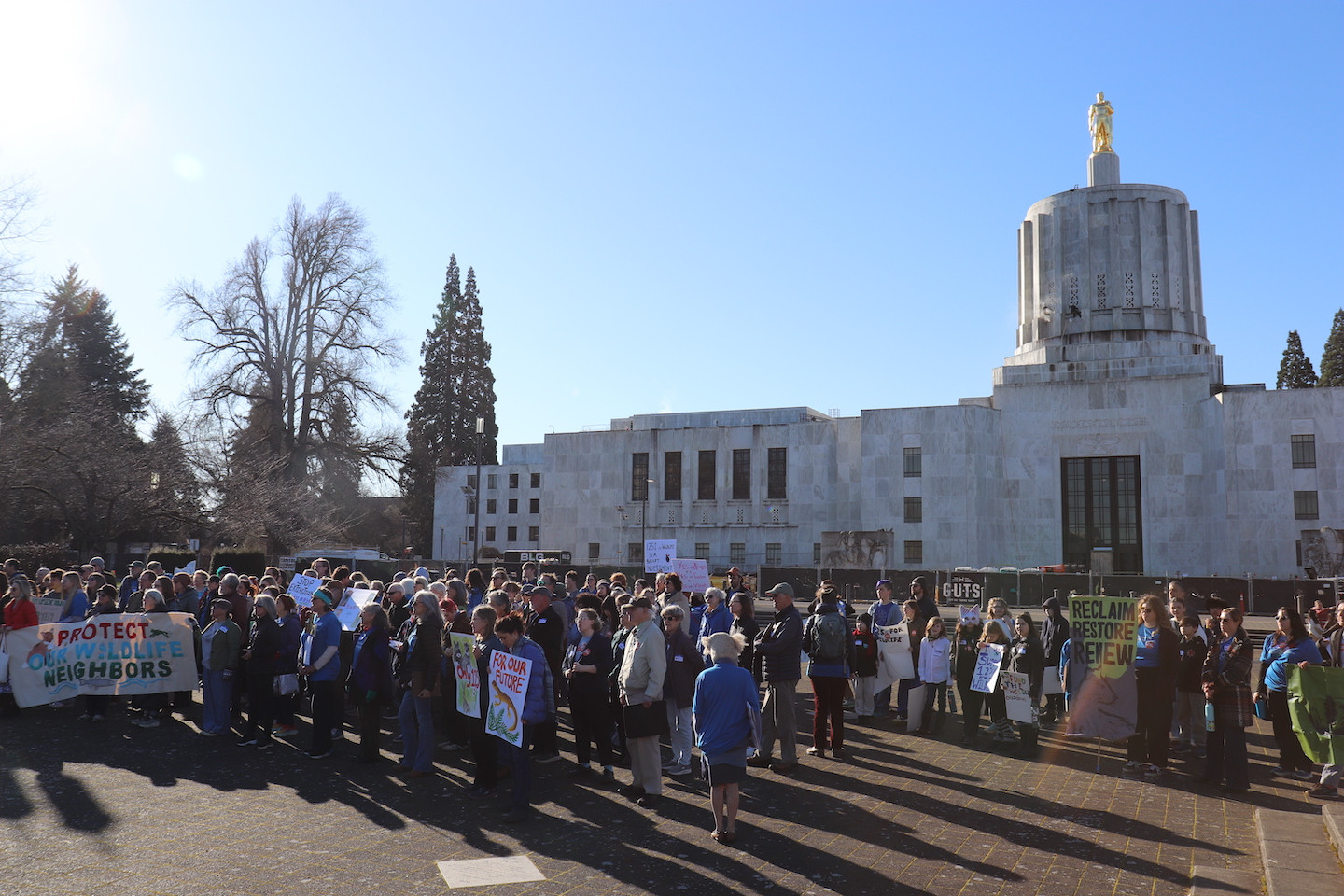 Lobby Day 2026 at the Oregon State Capitol | Photo Credit: A. Berman / The Bird Alliance of Oregon

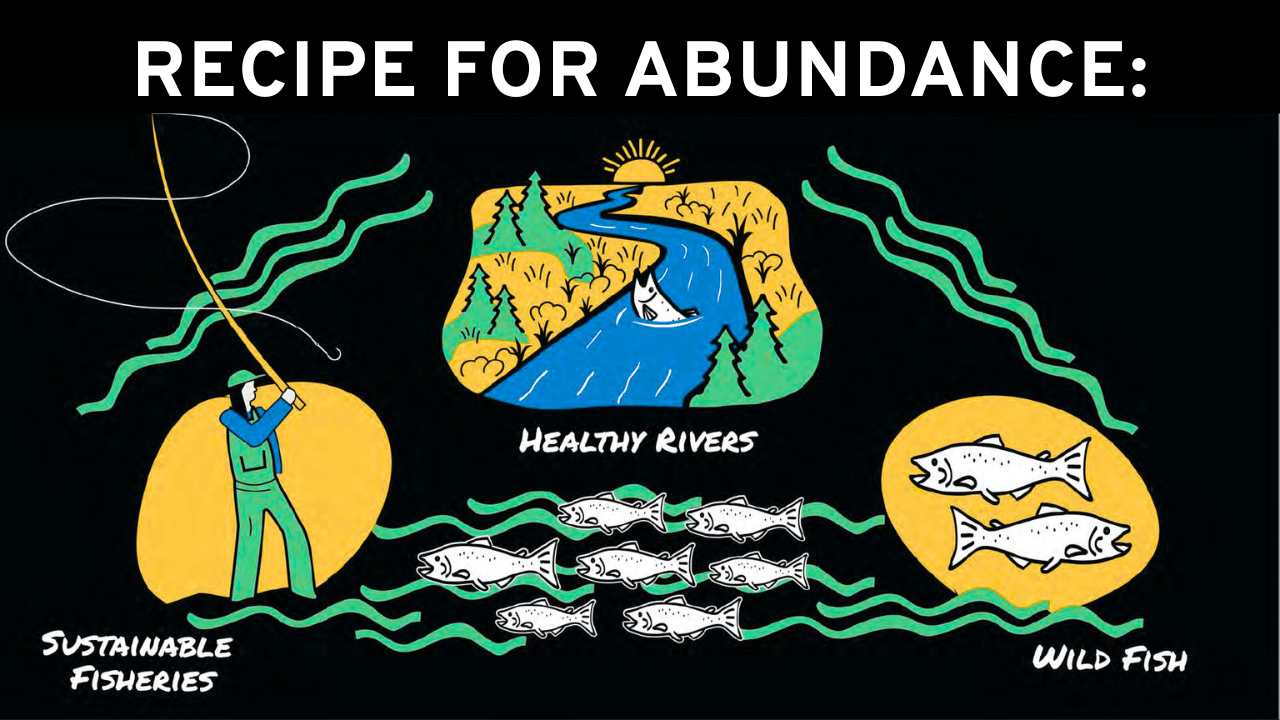
The Oregon legislature is at the midway point of its 2026 short session, and the pace has been nothing less than a sprint. Guided by Jennifer Fairbrother, our Legislative & Policy Director, our team has been on the ground in Salem, working to ensure that as legislators make rapid-fire decisions on budgets and policy, they don’t lose sight of the "Recipe for Abundance" – restoring habitat, prioritizing wild fish, and monitoring for sustainable fisheries.
The Oregon Legislature is now at the midway point of the 2026 short session, and the pace has been nothing less than a sprint, and lawmakers are making rapid-fire budget and policy decisions. Our team has been on the ground in Salem to ensure that lawmakers don’t lose sight of the most practical, cost-effective fish management path forward: Oregon’s Coastal Coho “Recipe for Abundance.”
That means providing Oregonians a better return on our investment by protecting and restoring habitat, prioritizing fish succeeding in the wild, and sustaining the core monitoring needed to measure results and support sustainable fisheries.
The choice is clear: stop doubling down on expensive and ineffective programs and redirect resources towards proven restoration and monitoring investments that deliver long-term returns for fish, local economies, and our state.
Here is an update on where things stand as we head into the second half of the session:
**Editor’s note: This article has been updated as of 9am February 18, 2026. Further legislative votes and actions on specific bills may have changed since this article was published.
The Good: Momentum for 1.25% for Wildlife
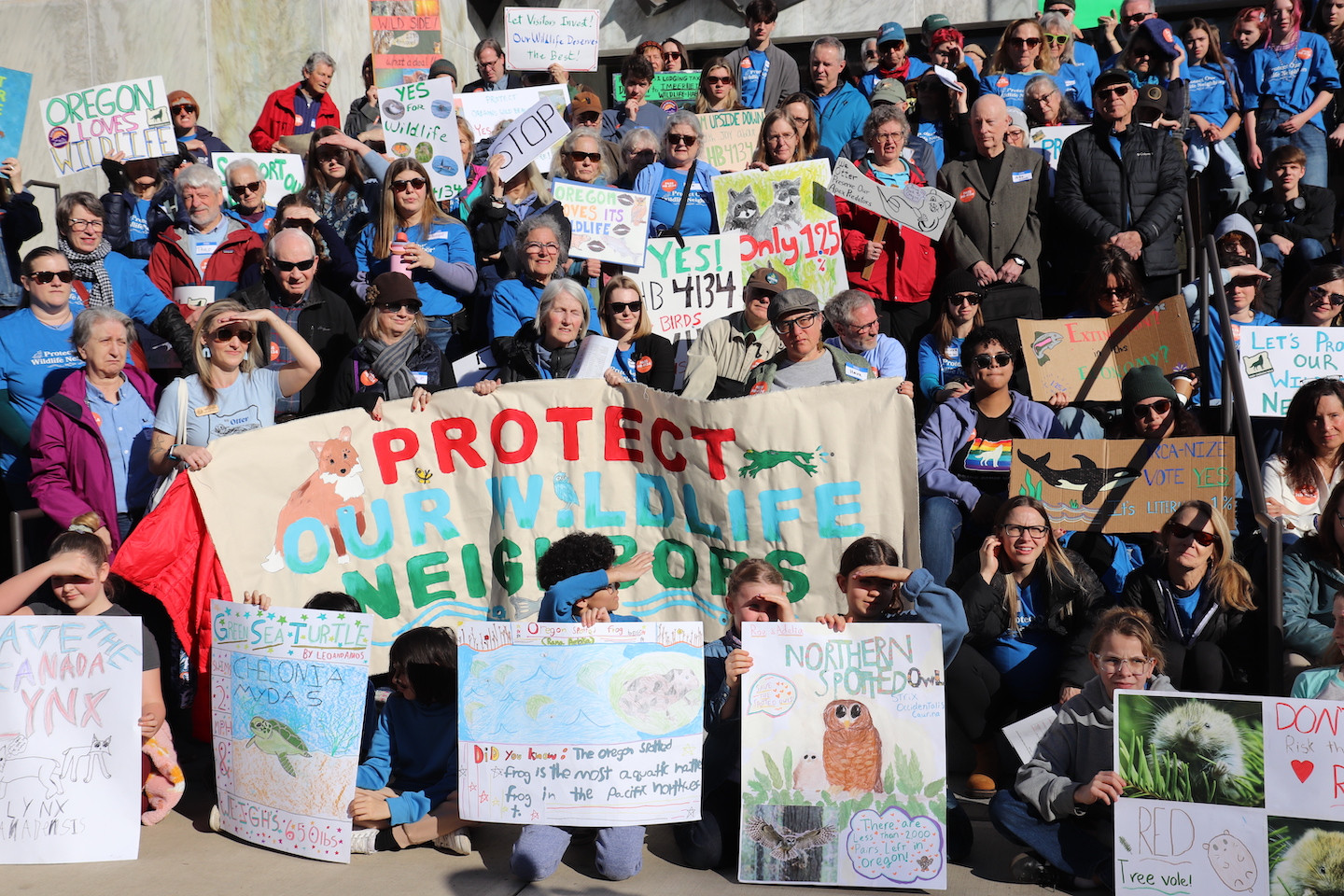
HB 4134 (1.25% for Wildlife) is moving with significant, bipartisan momentum. This bill would increase the state transient lodging tax to create a dedicated, sustainable funding source for Oregon’s most imperiled species and habitats. The House Revenue Committee held a packed hearing, and over 1,200 Oregonians submitted written testimony in support.
Last week, Native Fish Society staff joined partners for a Wildlife Action Day at the Capitol to urge legislators to pass this landmark bill. Nearly 300 Oregonians met with their legislators and spoke up on behalf of the state’s wildlife.
The Bad: Monitoring Cuts and Problematic "Credits"
Several proposals being considered this session could directly undermine ingredients in the Recipe for Abundance. They include:
ODFW Monitoring Budget Reductions: With the state facing a budget deficit, ODFW has been asked to identify reduction options for the 2025-27 biennium. Unfortunately, several of these proposals target Native Fish Monitoring—the very ingredient we need for sustainable fisheries.
Native Fish Society testified in person before the Ways and Means Committee to argue against these cuts (you can view our written testimony here). Without data on stream temperatures or adult fish returns, the state is forced to manage populations blindly, leading to either precautionary fishery closures or the risk of population collapse if unsustainable fisheries proceed.
For example, proposed reductions include eliminating surveys of adult coho and Chinook salmon returns to Oregon Coast watersheds. This information is vital to ensuring that the state can manage both harvest and non-harvest fisheries sustainably and have reasonable confidence that enough fish are returning to our rivers and successfully spawning the next generation. Losing this information will cut out one of the three vital ingredients from the Recipe for Abundance that has enabled the coastal coho comeback. And eliminating this program threatens the chance that this population will be the first salmon population to ever be recovered and removed from listing under the Endangered Species Act.
Over the decades, Native Fish Society volunteers have stepped up to collect monitoring data in their homewaters to help fill critical data gaps around the state. This year, local volunteers are launching new on-the-ground monitoring efforts in places like Bear Creek, demonstrating the strong public commitment to science-based fish management. We are so grateful to the Oregonians who dedicate their time to this critical work. But the truth is, there’s just too much to be done to rely solely on volunteers. That’s why we will also continue to advocate for the state to adequately invest in this critical ingredient in the Recipe for Abundance.
SB 1584 (Salmon Credits for Habitat Destruction): While proponents frame the bill as a way to incentivize restoration, our testimony highlighted several fatal flaws as to why this is a threat to the habitat ingredient in the Recipe for Abundance. This bill would create another avenue for developers to destroy existing, high-functioning habitat in exchange for buying "credits" from restoration projects that may not be functional for years, if ever.
Even more concerning, the bill allows for habitat destruction and mitigation to take place in different watersheds, fundamentally undermining the health of local river systems. By trading away the certain value of existing functional habitat for the uncertain promise of future restoration, this bill treats our rivers as a tradable commodity rather than a foundational ingredient in the Recipe for Abundance.
We believe we have successfully killed this bill for the session, but expect to see it again in future sessions.
The Ugly: Threats to Water and Regulatory Integrity
We are also pushing back against several bills that would undermine key ways the state regulates and protects our rivers and wildlife:
HB 4006 (Water Law Exemptions): This bill creates a unique and dangerous carve-out for a select group of irrigators along a 50-mile stretch of the Columbia River. It allows these users to bypass standard water laws without the state-level review required of every other farmer in Oregon. This lack of oversight risks potentially increasing the total volume of water diverted from a river system that supports federally listed salmon and steelhead and undermines years of cooperative work and good-faith agreements between conservationists, the state, and agricultural groups.
The bill received a hearing but did not move out of committee.
HB 4073 (Industry Favoritism in Regulatory Rulemaking): This proposal seeks to stack the deck for industry by mandating that at least half of any Rules Advisory Committee (RAC) be composed of representatives from regulated entities. In practice, this gives business interests an outsized voice in shaping the rules they must follow while effectively allowing them to force the exclusion of Tribes, conservation groups, and community members from the process.
Additionally, the bill adds "arbitrary and capricious" as a new judicial review standard in Oregon, a move designed to trigger years of costly, time-consuming litigation that would hamstring state agencies' ability to enforce environmental protections.
The bill has had a hearing but is not currently scheduled for a committee vote, which remains a possibility.
HB 4105 (Timber Harvest Rules): This bill would require the State Forester to adopt a "sustainable timber harvest level" by rule, prioritizing logging targets over all other forest values. By focusing almost exclusively on harvest volume, the bill threatens to undermine the hard-won State Forest Habitat Conservation Plan (HCP) and could lead to increased clear-cutting on public lands. Crucially, it creates a new, special right for the timber industry to sue the state over logging levels, potentially forcing more aggressive harvesting at the expense of fish habitat, clean drinking water, and carbon storage.
The bill received a hearing and was voted out of the first committee. It has now been referred to the Ways & Means Committee as it would require funding to implement.
A Note on the North Umpqua:
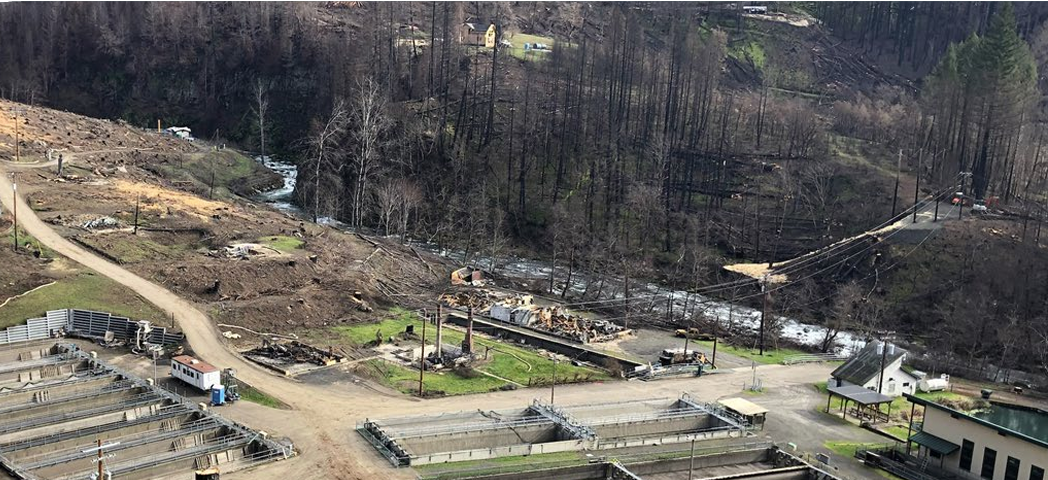
On February 9, ODFW briefed the Ways & Means Natural Resources Subcommittee on the future of Rock Creek Hatchery. As part of the North Umpqua Coalition, we submitted a joint letter urging legislators to reject rebuilding at this site and instead invest in what works: science-based habitat restoration and monitoring that rebuilds naturally resilient runs and supports a restoration economy.
Rock Creek ranked dead last in the state’s recent resiliency assessment. Pouring more of our tax dollars into new hatchery infrastructure at one of Oregon’s least climate-resilient sites is the definition of a high-cost, low-return investment. At the same time, our rivers get warmer and more volatile. Oregon can’t afford to rebuild yesterday’s system. The practical, fiscally responsible path is to phase down ineffective hatchery spending and redirect funds to proven restoration strategies that deliver lasting fish recovery, stronger watersheds, and better returns for communities.
~~~~~~~~~~
What’s Next & What You Can Do To Help
The next two weeks will determine which of these bills and budget decisions make it to the finish line and which are left behind. At Native Fish Society, we aren't just advocating against bad policy; we are standing up for a future full of healthy rivers with abundant wild fish. Whether it is defending the collection of data that keeps our fisheries sustainable or securing the funding to protect our most vulnerable species, our goal remains the same: invest in the Recipe for Abundance–restoring habitat, prioritizing wild fish, and sustainable fisheries.
Our wild, native fish have shown us that they can stage a comeback if we simply give them the chance. Now, it is up to us to ensure our laws and budgets reflect that same resilience.
You can help by sending an email to your Oregon Representative and Senator on any of the bills or issues discussed above, asking them to support the policies and budgets that can recover and conserve abundant wild fish and healthy rivers.
With the finish line in sight, let’s make sure the legislature keeps the Recipe for Abundance at the heart of every decision they make for our fish and rivers.
**Editor’s note: This article has been updated as of 9am February 18, 2026. Further legislative votes and actions on specific bills may have changed since this article was published.