River Steward Stories: Dave Lacey
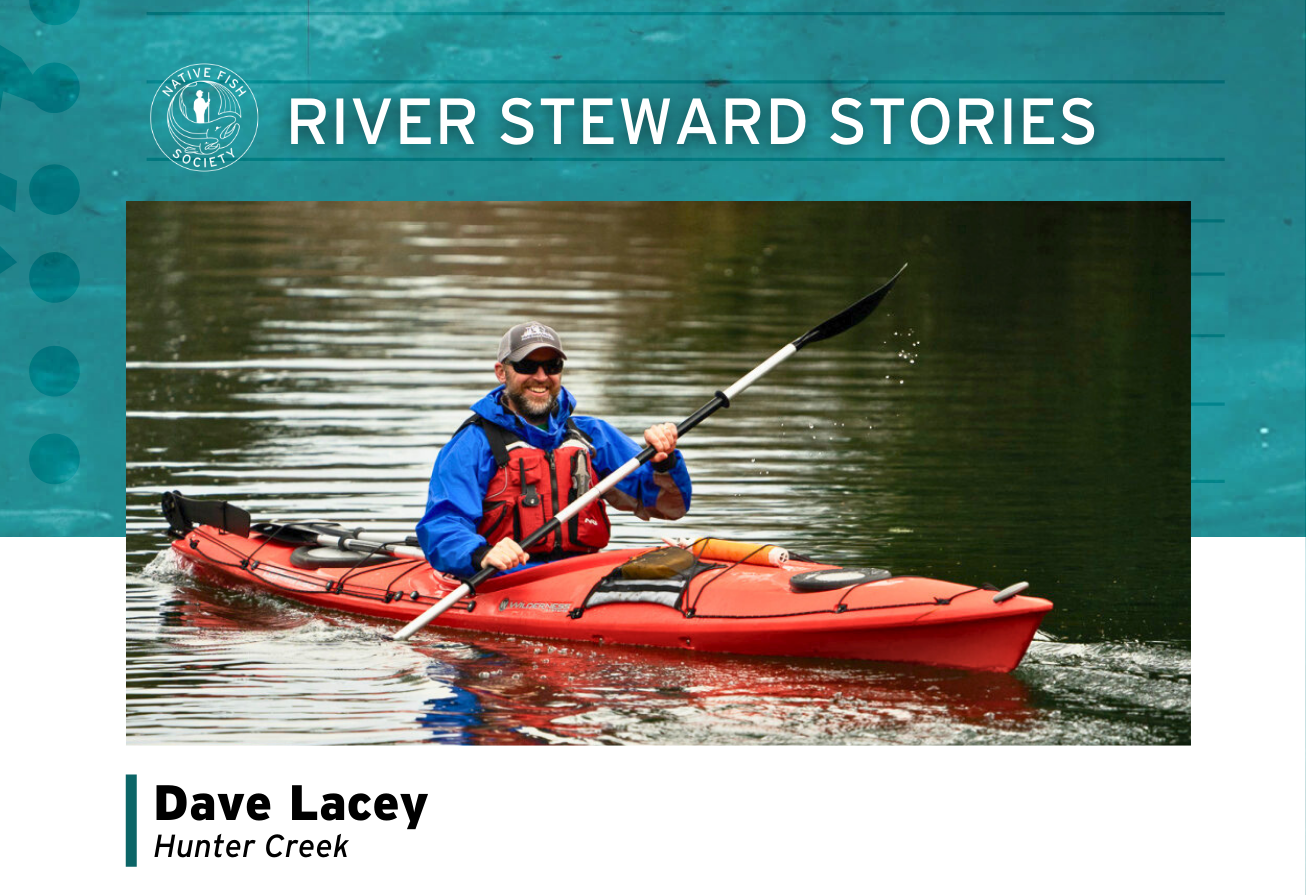
River Steward Stories is a new monthly series by Native Fish Society, where we get to know the River Stewards at the core of Native Fish Society’s conservation work, building a groundswell of public support for abundant wild fish, free-flowing rivers, and thriving Northwest communities.
Each month, we’ll dive deep and introduce you to a River Steward from around the Northwest, so you can learn more about what drives them, the rivers they serve, and how to connect with them.
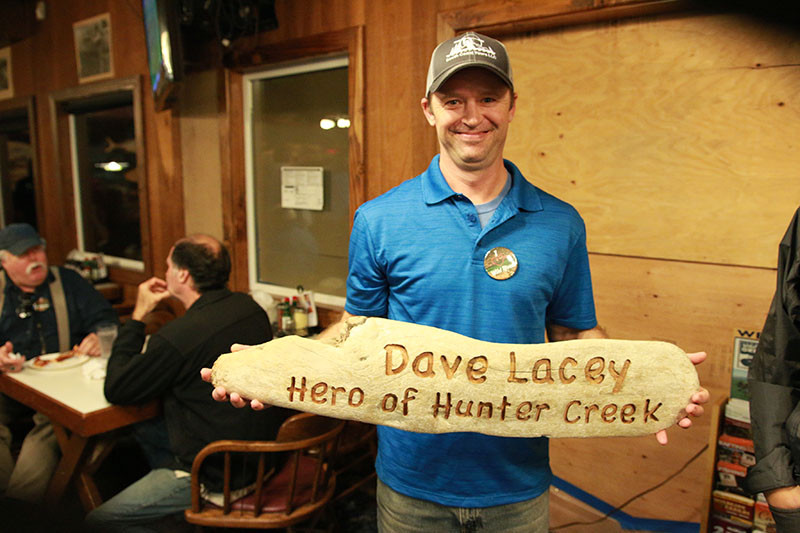
With no further adieu, meet Hunter Creek River Steward Dave Lacey!
~~~~~~~~~~~~~~~~~~~~
Meet Dave Lacey: NFS Hunter Creek River Steward
NFS (Bold) Describe your personal history/relationship with Hunter Creek?
Dave Lacey: I moved to Oregon in 1994 after finishing college in Washington State. After short stints in Florence and Eugene, I moved to Gold Beach in 1995 and have lived up Hunter Creek since 2000. I love where I live and have raised my family on a wonderful piece of land above the creek where we fish, swim, and lounge along the banks of this wonderful Oregon coast stream. The south coast has so much available outdoor recreation and is known as the Wild Rivers Coast for the 5 Wild and Scenic Rivers here. It is truly a special place to be.
What does the Native Fish Society represent to you?
NFS represents a true grassroots organization that isn't afraid to take up controversial issues. The River Steward program is the perfect example of that, with activists spread out throughout the Northwest working on issues that other organizations are shying away from. I've done a fair amount of volunteering for different organizations, and NFS is one of the best out there.
Why do Rivers need Stewards?
Rivers may not necessarily "need" stewards, but they are better off with a steward looking out for them. Having a passionate advocate for a stream will only support the health of the stream and its inhabitants.
Hunter Creek is one of my anchors for life in Gold Beach. . . This stream has been my friend for more than 20 years.
What is one (or more) thing(s) you find unique, that you find special, about Hunter Creek? Describe what Hunter Creek means to you.
Hunter Creek is special for lots of reasons. One special thing about Hunter Creek is the water quality. It has remarkably clean water, considering the upstream logging that happens. That is important to us residents who get our drinking water from the creek. My family has also been swimming in various holes up and down the creek. Lots of local folks and visitors have found the swimming up Hunter Creek to be quite fabulous. Another awesome thing about Hunter Creek is its fisheries. Whether you like Big Salmon or fat Steelies, Hunter Creek has some really fun fishing opportunities with beautiful scenery to boot.
Hunter Creek is one of my anchors for life in Gold Beach. Whether it's walking my dogs up the creek, fishing, or swimming in the creek, this stream has been my friend for more than 20 years. Every time I drive up the creek to my house, I am comforted by its clean and cool waters.
What keeps you motivated to continue your work as a River Steward on Hunter Creek?
There's always a threat to any watershed. For Hunter Creek, it seems to be mostly the mineral-rich soils up in the mountains. Mining could severely affect everything that is awesome about Hunter Creek and Pistol River, the next watershed to the south of me. The current administration and its push to open up more resource extraction has a lot of us worried about our favorite streams. We have spent a lot of energy trying to fight these multinational corporations who want to strip mine the headwaters of so many of our south coast watersheds. Even with our success with a mineral withdrawal designation, we are still worried that things may progress as our government is doing crazy things right now. They are about to do 50 sonic drilling samples to test the quality of the minerals before doing the potential strip mining.
In general, what are your conservation priorities for Hunter Creek?
Stopping strip mining is the number one priority. Other than that massive threat, we are always looking at fishing pressure, sediment abatement, and failing septic systems. As the Hunter Creek representative on the South Coast Watershed Council, I am always advocating for more work in the cree,k like log placement, riparian areas, and finding out more about the septic issues.
"What's working" on Hunter Creek that you're looking to continue or encourage growth in?
We still need to raise more awareness about the mining threats. We pushed hard for years to get that mineral withdrawal, but it won't necessarily stop the mining claims that were established before the withdrawal went into effect. The mining laws in this country are horrendous and so slanted towards the companies that do the mining. It's so ridiculous that we still operate under a law from 1872.
Specifically, what are the premier challenges facing Hunter Creek that you're interested in working to rectify?
The mining is the big one. Above and beyond that, I work in the advocacy field inside the watershed council. Even though it is incredibly slow to get things going, it is a good way to get some restoration done inside an existing program. I think many of our coastal streams are still recovering from early logging impacts.
More specifically, what's working on Hunter Creek that you're looking to continue, or encourage growth in?
The Deschutes has many, many stakeholders who all feel passionately about the river. That passion often translates into benefits as people and organizations work to implement their visions. I hope and think these efforts will continue.
In reality, sometimes these efforts happen in silos without much interchange between stakeholders. As an individual or even a small group, it’s easy to feel lost in the immensity of the challenges. I know it has been spoken of for years—decades—but it would be wonderful if we could do a better job of coordinating our efforts and consolidating our voices for greater impact. The increasing awareness of environmental conditions in the river, its reservoirs, and upstream tributaries has galvanized efforts to promote stream restoration, better manage irrigation, and provide cold water refuges for fish. This is a good place to start from and should continue as we seek to improve the lot of the anadromous runs.
Describe what you see as the benefits to your community with a healthy, abundant, and resilient Hunter Creek.
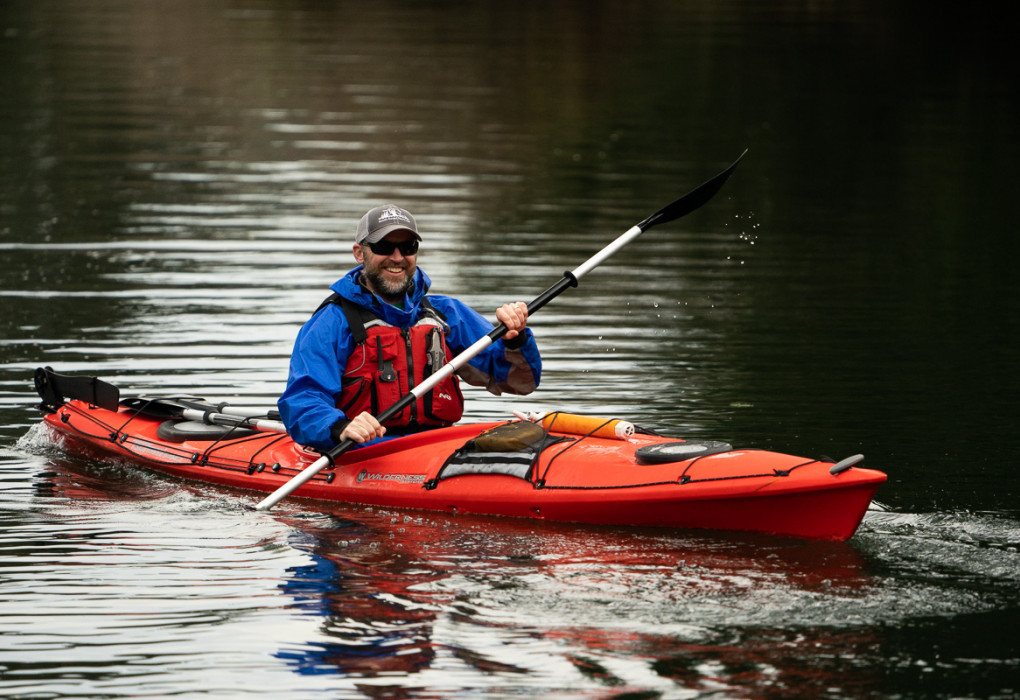
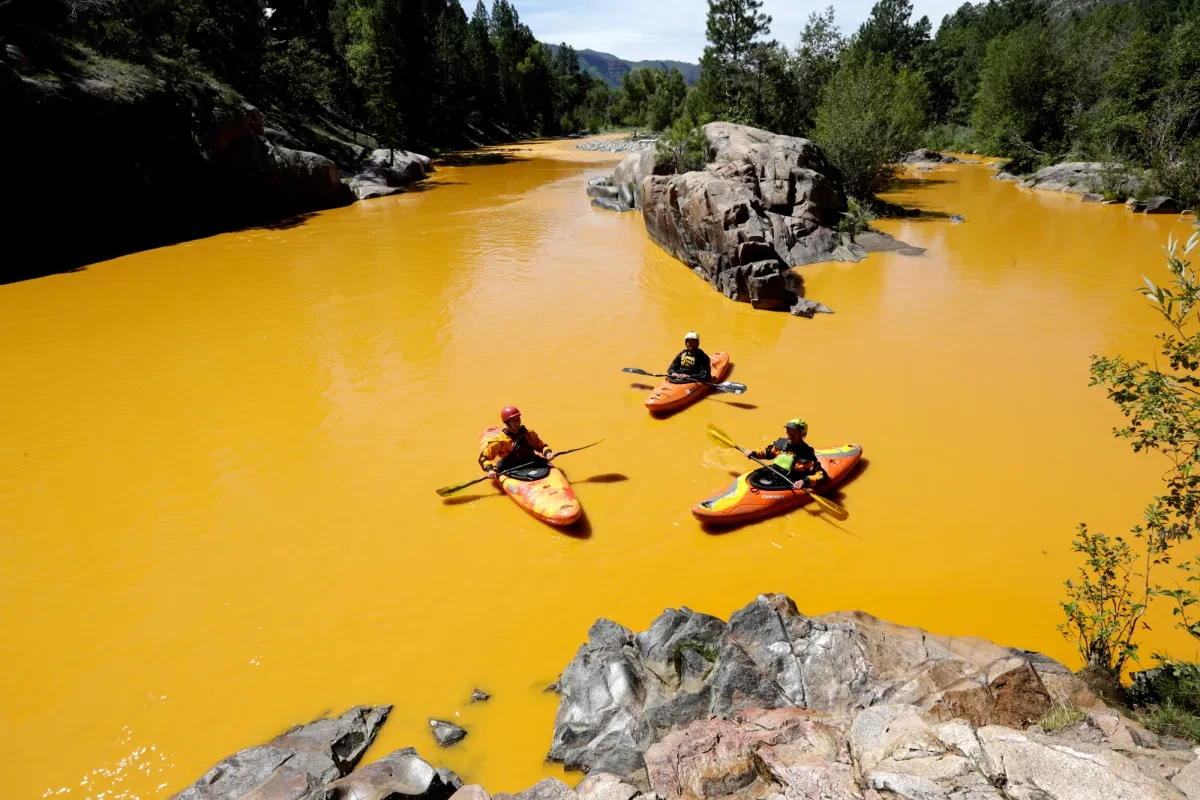
There are many benefits associated with a healthy stream. I'd say a really important one is how the community feels about the quality of the drinking water, and whether they feel safe taking an afternoon swim in the source of that water. There's something that just feels right about drinking water right out of your tap and enjoying the local river lifestyle. Whether you are kayaking, fishing, or swimming, a clean waterway is really important. We have seen what it looks like with mining impacts in streams like the Animas River (see picture above). Advocates there actually went kayaking in the polluted river to raise awareness. I really don't want to have to do that!
What's the very next thing you'd encourage community members to tune in to, or to be aware of, regarding Hunter Creek?
Learn more about the mining threats. If this goes through to full strip mining, Hunter Creek, Pistol River, and other south coast streams will eventually be ruined. We can't let that happen.
~~~~~~~~~~~~~~~~~~~~
River Steward Stories is a monthly series, so stay tuned for more inspiring conversations with the volunteers restoring and protecting their homewaters across the Pacific Northwest.
Follow along to learn about activities and opportunities to engage with the Portland Chapter of the Native Fish Society on Instagram at @nfs_pdx
If you have questions about the River Steward program, or Native Fish Society’s conservation campaign efforts in Oregon, contact Northern Oregon Coordinator Daniel Ritz at daniel@nativefishsociety.org or Southern Oregon Coordinator Charles Gehr at charles@nativefishsociety.org.