River Steward Stories: Mark Metzdorff
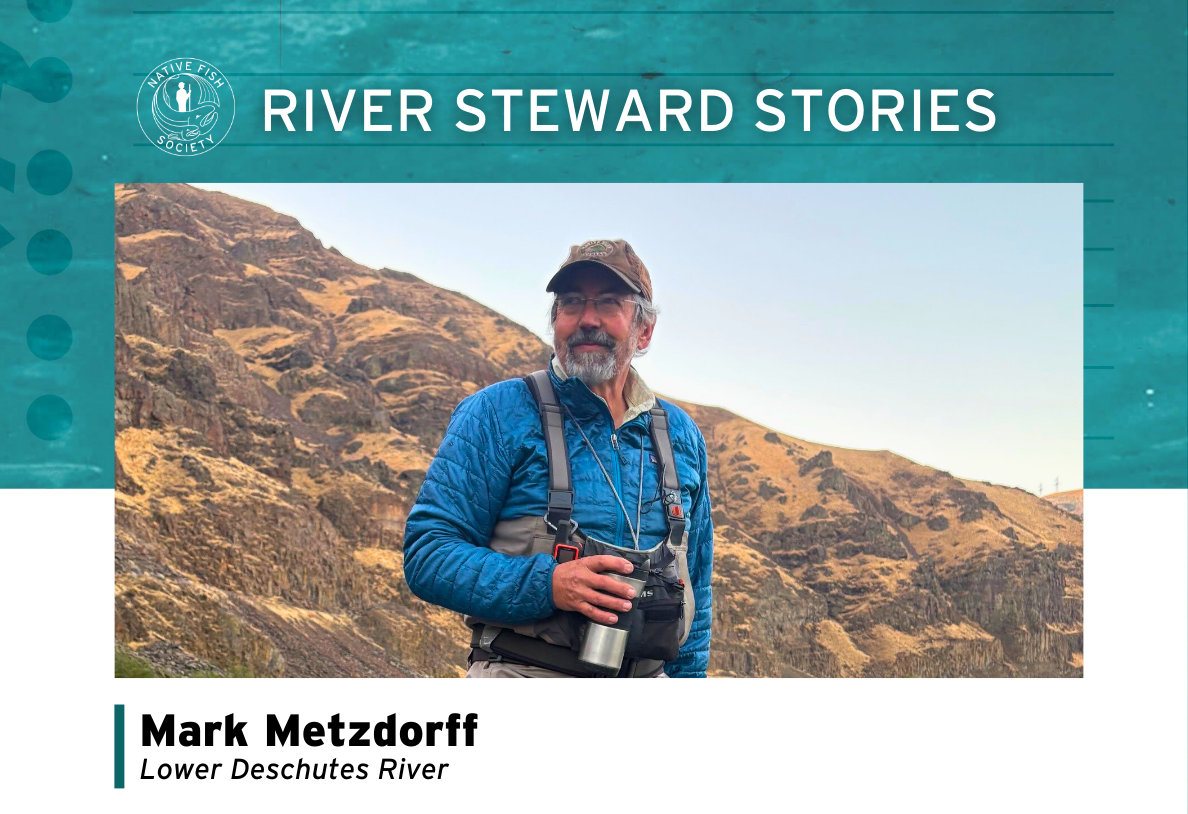 Meet Mark Metzdorff, NFS lower Deschutes River Steward
River Steward Stories is a new monthly series by Native Fish Society, where we get to know the River Stewards at the core of Native Fish Society’s conservation work, building a groundswell of public support for abundant wild fish, free-flowing rivers, and thriving Northwest communities.
Each month, we’ll dive deep and introduce you to a River Steward from around the Northwest, so you can learn more about what drives them, the rivers they serve, and how to connect with them.
With no further adieu, meet Lower Deschutes River Steward Mark Metzdorff!
~~~~~~~~~~~~~~~~~~~~
Meet Mark Metzdorff: NFS Lower Deschutes River Steward


NFS (Bold) Describe your personal history/relationship with the lower Deschutes River?
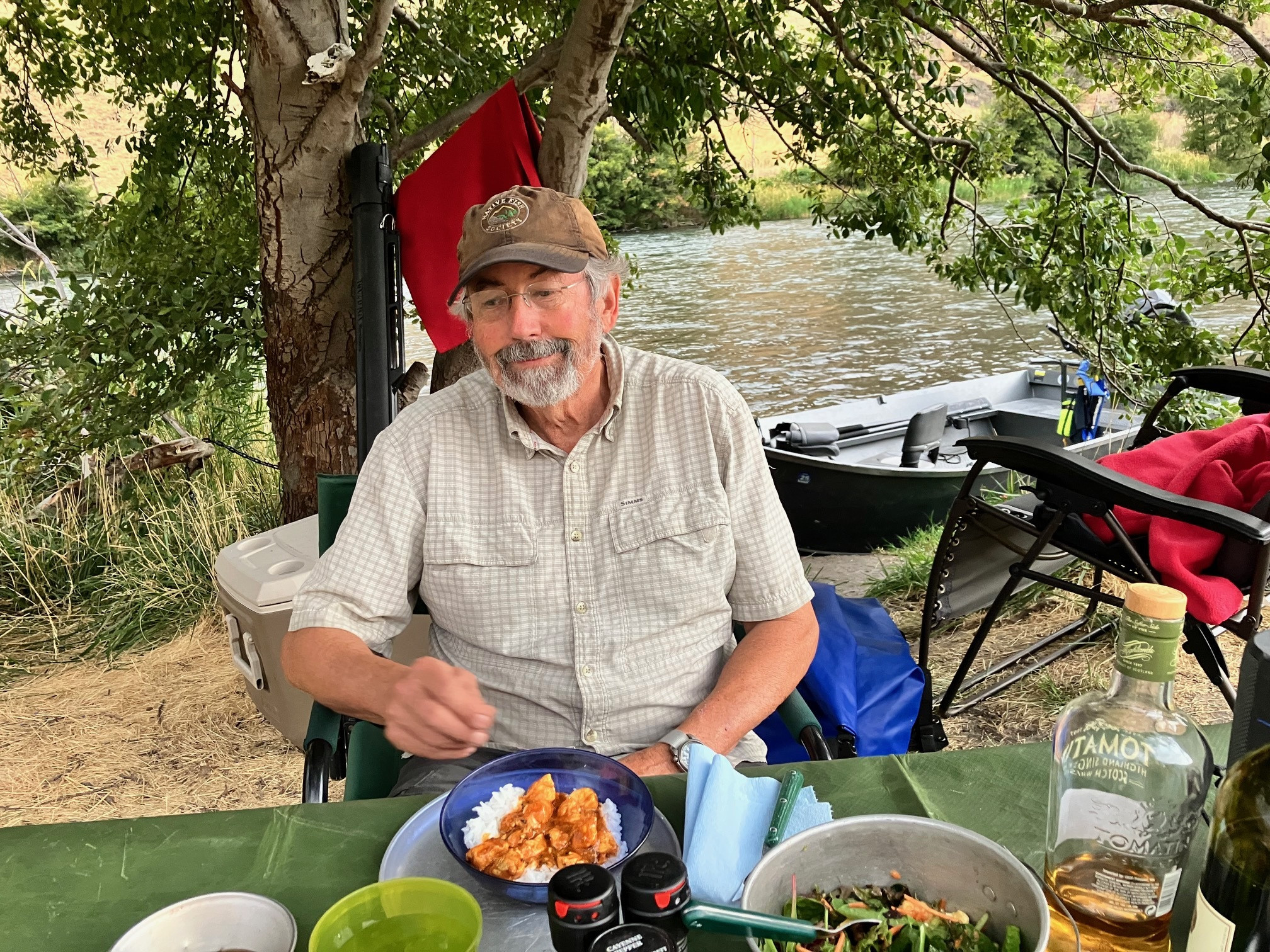
Mark Metzdorff: Having been born in Wisconsin, I grew up in the late 1950s and early 1960s using spinning gear and targeting warm water species. During my 6 years of training in general surgery in Portland, I had little time for fishing and knew nothing of the Deschutes River. However, on backpacking trips along rivers in the Pacific NW, carrying a small spinning rod in my kit, I undoubtedly caught and killed a few small “rainbow trout” which, in retrospect, were probably steelhead smolts.
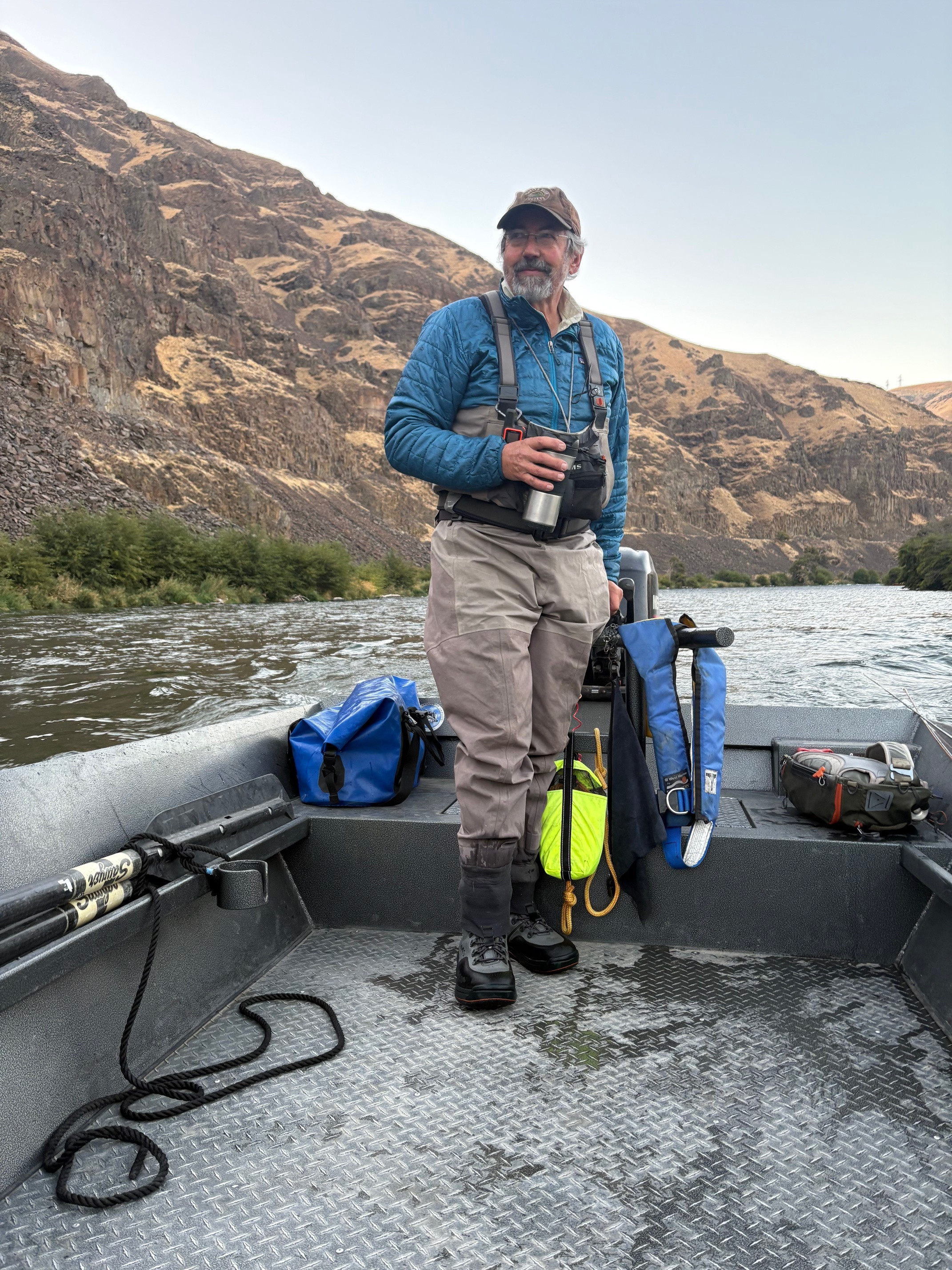
When I returned to Portland in 1988 after further training in Chicago, a friend of my wife and I suggested that we spend a weekend camping on a desert river not far away, and we spent two nights at the Beavertail campground: my first ever exposure to the Deschutes. Our friend outfitted me with waders and a fly rod and taught me the basics of casting. One morning, we had a splendid hatch of pale morning duns, fish were rising everywhere, and I actually caught a few. As if that wasn’t enough to disrupt my angling world, that night in camp, we came across a man who was cleaning the biggest rainbow trout I had ever seen: a hatchery steelhead. That weekend changed my life. I fell in love with the Deschutes River, was forever after a fly angler, and I was determined to learn to find and catch these amazing fish called steelhead.
I had no idea of the journey that would follow. Over the ensuing 35 years, I learned how to fish and boat the river; learned about the miracle of its anadromous fish; made many friends and acquaintances from these experiences; and I learned about how fragile this ecosystem is, and that it needs our support to sustain what I was lucky enough to experience in some of its prime years. That led to my association with and support of several Deschutes-oriented organizations, including the Flyfisher’s Club of Oregon, Oregon Trout, and the Native Fish Society.
What does the Native Fish Society represent to you?
One of my Deschutes fishing acquaintances who has become a lifelong friend is Tom Derry; Director of Wild Steelhead Funding for NFS, executive chef, expert angler, and a fun guy to hang around with. Tom was an early supporter of the NFS, and he recruited me to be more involved with the organization. Like all of the good people working with NFS, he personifies the River Steward concept: committed grassroots actors working with passionate environmental professionals in support of wild native fish and the watersheds that birth and sustain them. For me, the emphasis on wild fish is what sets NFS apart. Of course, there is so much more to the watersheds we love than just the fish, but wild salmon and steelhead are icons of the Pacific Northwest, our home. If we do what is necessary to support and sustain these fish, the benefits to the entire ecosystem will naturally come along.
"People who are invested in their special places are the best observers and advocates for them."
Why do Rivers need Stewards?
People who are invested in their special places are the best observers and advocates for them. Over the past decades, there have been many factors at work that threaten our natural resources. Although great national and state programs were instituted to address these issues, we have seen that governmental agencies tasked with supporting and sustaining these precious places are subject to political whims. River Stewards, such as NFS supports, focused on watersheds they know and love, can at least serve as watchdogs for detrimental changes or violations of law, and at best can catalyze and effect changes that benefit the resources.
What is one (or more) thing(s) you find unique, that you find special, about the lower Deschutes River? Describe what the lower Deschutes River means to you.
The Deschutes River is a miraculous blend of geology, climate, and geologic history that yielded a long, broad green ribbon of oasis in the desert of central Oregon. It supports a vast ecosystem of plant, insect, bird, mammal, and piscine life. Its connection to the Pacific via the Columbia River allowed the development of multiple races of anadromous fish, which fed not only the river habitat, but also the indigenous people living on the river’s reaches, for thousands of years. Yet in just 70 years, this precious resource of anadromous fish has been reduced to a small fraction of what it once was, and some runs face imminent extinction.
"As a passionate user of the river, I feel obligated to do what I can to help achieve the goal of sustainable runs of wild native fish."
What keeps you motivated to continue your work as a River Steward on the lower Deschutes River?
I support the Native Fish Society’s focus on the importance of wild, native fish as a marker of the health of rivers, and the Deschutes in particular. As a passionate user of the river, I feel obligated to do what I can to help achieve the goal of sustainable runs of wild native fish. In a situation with so many stakeholders, one person may not be able to do a lot, but they can do something. And who knows where that might lead?
In general, what are your conservation priorities for the lower Deschutes River?
My number one priority is to fight for the rescue of the historic anadromous fish runs. This must be done with the help of valid, well-done science and with a sensitivity to the needs and roles of the region’s indigenous people. Other priorities flow from this.
Specifically, what are the premier challenges facing the lower Deschutes River that you're interested in working to rectify?
Well, like the rest of our world, the premier challenge facing the Deschutes and all of us is climate change. That’s a tough one, and beyond the scope of a humble river steward! (although we can all do our part). As we see the impacts of warmer water temperatures on anadromous fish, it’s clear that climate change will be a major factor in the future.
However, on a smaller scale, I have been most interested in following the “reintroduction program” for steelhead, chinook, and sockeye salmon centered around the management of the Pelton Round Butte dam complex and its upstream rivers. As a physician, my worldview is rooted in science and statistical analysis. When I signed on with NFS in 2015, people were excited about the prospects for the still-young efforts at the project, which, while somewhat novel and untested, seemed to have some basis in fisheries science. I was very interested to see how this developed.
After 10 years as an observer, and as the project has now been operating for more than 14 years (or three generations of anadromous fish reproduction), and after the expenditure of hundreds of millions of dollars, in my opinion, the results have been worse than disappointing. Although some good has come out of the project, repeated attempts to “adaptively manage” the workings of the hatchery-based, trap and haul program to circumvent the deleterious effects of the dam and reservoir complex have not come close to achieving the stated goals of the project as elaborated in the documents submitted in support of the dam reauthorization license granted more than 20 years ago. The open-ended timeline of the “adaptive management” concept allows the ineffective project to continue unabated. I believe it is time to draw attention to this situation, to the dismal results, and to look for other solutions. These solutions will obviously involve the Confederated Tribes of the Warm Springs, who are a salmon people and the longest-standing stakeholders in the region.
More specifically, what's working on the lower Deschutes River that you're looking to continue, or encourage growth in?
The Deschutes has many, many stakeholders who all feel passionately about the river. That passion often translates into benefits as people and organizations work to implement their visions. I hope and think these efforts will continue.
In reality, sometimes these efforts happen in silos without much interchange between stakeholders. As an individual or even a small group, it’s easy to feel lost in the immensity of the challenges. I know it has been spoken of for years—decades—but it would be wonderful if we could do a better job of coordinating our efforts and consolidating our voices for greater impact. The increasing awareness of environmental conditions in the river, its reservoirs, and upstream tributaries has galvanized efforts to promote stream restoration, better manage irrigation, and provide cold water refuges for fish. This is a good place to start from and should continue as we seek to improve the lot of the anadromous runs.
Describe what you see as the benefits to your community with a healthy, abundant, and resilient lower Deschutes River.
It should go without saying (but I’ll say it anyway) that the benefits accrue to all of us: mitigation of climate change effects on a local scale, clean water for many uses, recreation in all forms, sustenance to the salmon people, and, perhaps most importantly, a shared sense of community among all these groups. For many of us, it also inspires our strong sense of spiritual connection to the natural world.
What's the very next thing you'd encourage community members to tune in to, or to be aware of, regarding the lower Deschutes River?
I hope that we will soon see efforts led by the Native Fish Society, perhaps along with the four other NGOs who were signatories (and erstwhile environmental watchdogs) in the relicensing of the Pelton Round Butte dam complex, to draw attention to the status of the anadromous fish reintroduction project. Where that may lead, it’s hard to predict, but I have some ideas.
~~~~~~~~~~~~~~~~~~~~
River Steward Stories is a monthly series, so stay tuned for more inspiring conversations with the volunteers restoring and protecting their homewaters across the Pacific Northwest.
Follow along to learn about activities and opportunities to engage with the Portland Chapter of the Native Fish Society on Instagram at @nfs_pdx
If you have questions about the River Steward program, or Native Fish Society’s conservation campaign efforts in Oregon, contact Northern Oregon Coordinator Daniel Ritz at daniel@nativefishsociety.org or Southern Oregon Coordinator Charles Gehr at charles@nativefishsociety.org.