Welcome back to the Deschutes Diaries! In this series, we delve into the dynamics of the Deschutes River, examining its past, present, and future challenges. In this issue, we dive into the history, current status, and applicable management programs for the wild fish populations in the lower Deschutes Basin. Today, we’re taking a closer look at the wild trout and salmon populations managed without hatchery counterparts.
Through these articles, we’ll take a closer look at the events that shaped the Deschutes River we know today, and highlight Native Fish Society's efforts to protect and revive its wild abundance.
This is an ongoing series to showcase and open the conversation of our Deschutes: Return to Wild & Cool campaign. Along the way, we’ll be sharing important milestones, ongoing efforts, and how you can be a part of this vital work. Additional parts and updates will be posted over the next several months. Stay tuned!
Redband Trout (Oncorhynchus mykiss gairdneri) are a subspecies of Rainbow Trout. Redbands are typically found in high desert rivers of Oregon, Washington, Montana, California, and Nevada. A somewhat anomalous population of Redbands exists in the McKenzie River of Oregon, which is now a tributary of the Willamette, but was historically a tributary of the Deschutes. Redbands are often more brightly colored than their coastal kin and can tolerate higher water temperatures.
Current Management
Native Redband trout in the lower Deschutes are managed by both ODFW under Oregon’s Native Trout Conservation Policy, largely guided by the influential 1989 Schroeder Report, and the Confederated Tribes of Warm Springs.
In a presentation titled “2024 Lower Deschutes River Fish Population Status Update,” ODFW stated Redband trout densities were positive, with a 20-year average of more than approximately 1,500 trout per mile in one of the three sites tested above Sherars Falls.
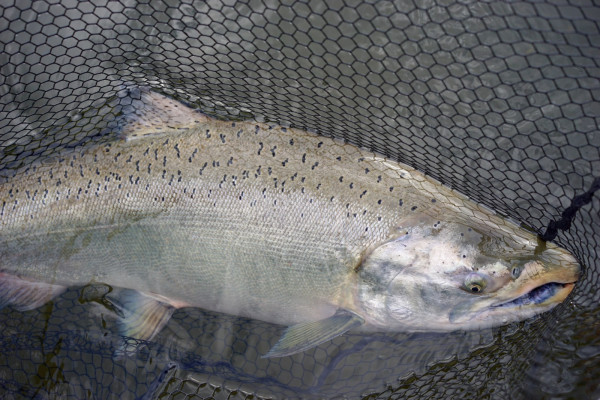
Fall Chinook salmon, also known as “King” salmon, are the largest of the Pacific salmon species. Historically, some Chinook salmon stocks included individual fish weighing 100lbs. Chinook salmon are native to cold-water rivers in North America from California to Alaska, as well as Northern Japan and rivers feeding the Siberian Sea. Fall Chinook salmon are born in freshwater rivers, they quickly migrate as young fish to the ocean where they grow and mature for up to eight years. When they reach maturity adult fall Chinook return to their natal streams during the late summer and fall months and spawn during the fall and early winter months. All fall Chinook salmon die after spawning.
No hatchery fall Chinook have ever been released in the Deschutes basin. Data from 1998-2002 shows that hatchery strays from other basins made up less than 1% of the Deschutes fall Chinook observed at Sherars Falls in years of available data.
Fall chinook in the Deschutes River are co-managed as “Upriver Brights” by ODFW and the Confederated Tribes of the Warm Springs, and are not listed as threatened or endangered under the Endangered Species Act. Three of the four assessed historical populations in Oregon tributaries became extinct in the early 1900s due to the destruction of lower river habitat, according to ODFW’s Native Species Report.
Current Status
The Deschutes River boasts one of the healthiest runs of wild fall Chinook salmon remaining in the entire Columbia River basin. In 2024, ODFW’s 2024 Lower Deschutes River Fish Population Status Update reported more than 40,000 adult wild Fall chinook salmon returned to the Deschutes River in 2024.
Considering their unique life history expressions and habitat use, as well as being co-managed by ODFW and tribes under the United States Fish & Wildlife Service (USFWS) as a threatened Species under the Endangered Species Act, we thought it was best to dedicate an entire Deschutes Diaries on Bull trout of the Deschutes. Coming soon!
Species Spotlight
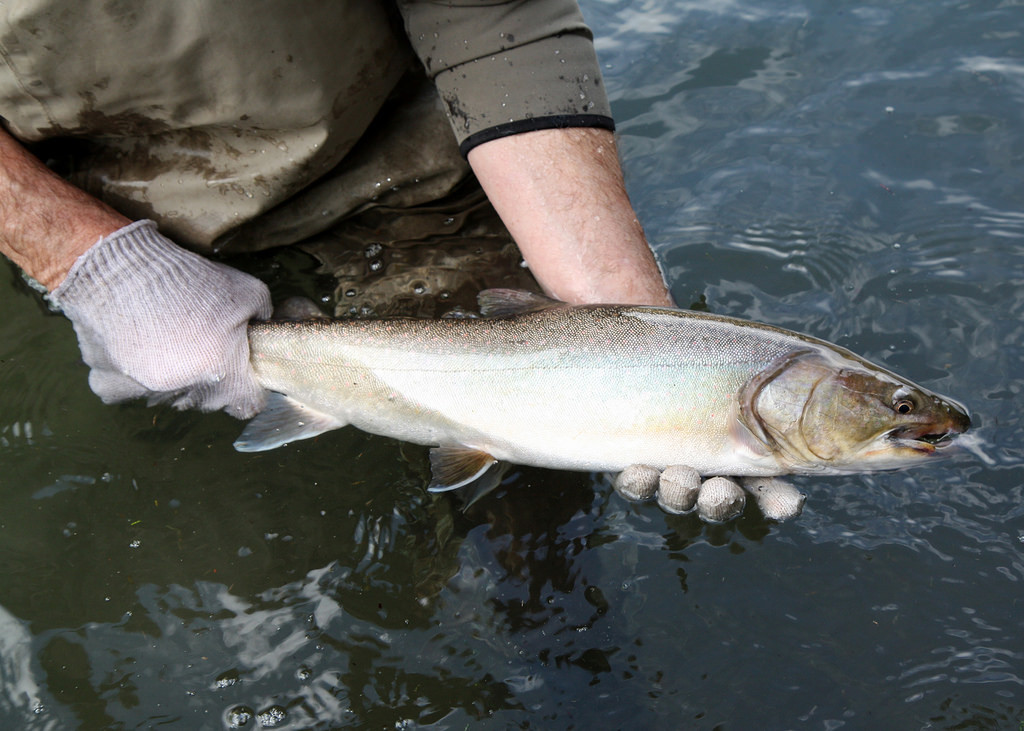
Bull Trout are a native char found in the cold-water rivers of northwestern North American including the Yukon, British Columbia, Alberta, Washington, Oregon, Idaho, Montana, and northern Nevada. Historically, their natural range included northern California. Most Bull trout are born and mature in freshwater rivers, while some in coastal waters may also use the ocean for feeding. Other populations of Bull trout live in both rivers and adjoining lake systems. Bull trout often prey on other fis,h and so they can grow very large, with some adult fish weighing more than 20lbs. Bull trout spawn in the late summer and fall months. Bull trout eggs remain in gravel for up to 210 days, a very long incubation period, after which the fry emerge. These young fish will live in their natal waters, rearing for 1 to 4 years before migrating elsewhere. Adult Bull trout do not usually die after spawning.
Bull trout in the Deschutes SMU are native fish sustained by natural production. All populations pass the reproductive independence criterion.
Current Management
The U.S. Fish and Wildlife Service completed a 5-year status review and Species Status Assessment for bull trout in the lower 48 states in 2024, and recommended no change to the Threatened listing status of Bull trout under the Endangered Species Act.
Current Status
The USFWS Bull Trout Recovery Plan identifies the lower Deschutes River Bull trout population as a population stronghold, along with only the Lewis River in Washington.
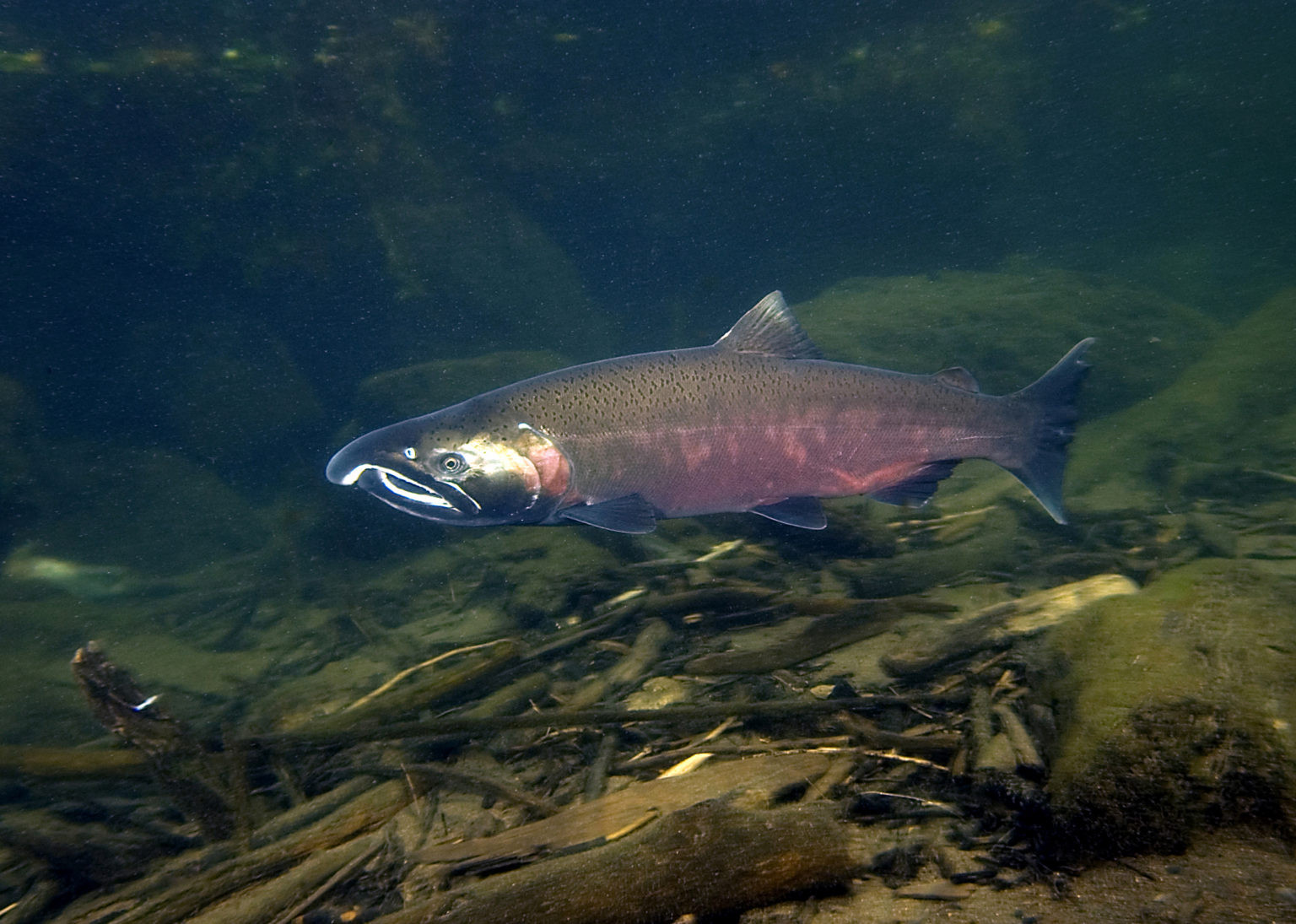
Coho salmon, also known as silver salmon, are native to cold-water rivers in North America from California to Alaska, Northern Japan, and eastern Russia. Coho salmon are born in freshwater streams where they spend 1 to 2 years rearing, often in off-channel sloughs and brackish waters. Juvenile Coho Salmon migrate to the Pacific Ocean between March and July and remain in salt water for 1 to 3 years. Adult Coho Salmon, weighing between 7 and 11 pounds, return to their natal rivers during the fall months where they spawn. All Coho salmon die after spawning.
Current Management
The wild Coho that return to the Deschutes River are co-managed by ODFW and the Confederated Tribes of the Warm Springs, and are not included in the Lower Columbia ESA listing from 2005, which ends at the White Salmon in Washington and Hood River in Oregon (inclusive). Recognized as a native fish species by ODFW but with little evidence of historical presence of Coho in the Deschutes, traditional knowledge suggests Coho were plentiful in the lower Deschutes.
Wild Coho salmon in the Deschutes River are not currently supplemented by a hatchery, however there are reports of past efforts to introduce Coho salmon in the basin.
Status
In 2024, ODFW’s 2024 Lower Deschutes River Fish Population Status Update showed that more than 6,000 wild adult Coho salmon returned to the Deschutes River above Sherars Falls. This increase is the third time in 5 years that more than 2,500 wild adult Coho salmon have returned.
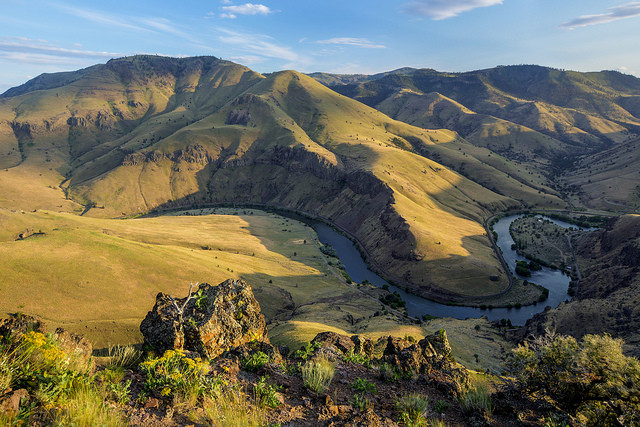
Lower Dechutes River | Photo Credit: BLM
Looking Ahead
Without a doubt, the complexities and intricacies of the Deschutes River can be overwhelming, but, in the lower Deschutes, there is a clear difference between the diversity, abundance, and resilience of populations of fish managed for wild abundance, as compared to species heavily influenced by hatchery programs.
In 2026, Native Fish Society’s work on the Deschutes will be guided under a single, easy-to-understand charter. We will advocate for a healthy river and a sustainable fishery reliant on wild fish.
In the near term, we look forward to sharing a report we’ve been assured is coming from the Oregon Department of Environmental Quality, updating us on water quality in the lower Deschutes River. Later in the year, we look to build on that new information with the results of our Salmonfly Project and Bionergetic study results.
But, it doesn’t end there. A sustainable fishery built on a diverse, abundant, and resilient population of wild fish is what will allow the Deschutes to maintain its internationally renowned status as one of the busiest yet functional multi-species fisheries in the world.
~~~~~~~~~~~~~
Next month, we’re heading upriver for a look at the history, management, and status of wild fish of the Deschutes River above Pelton Round Butte Hydroelectric Project, including its iconic tributaries the Crooked, Deschutes, and Metolius.
If you have any questions or topics you'd love to see covered in Deschutes Diaries, please don’t hesitate to reach out – we’d love to hear from you! Send us an email with your questions and suggestions at info@nativefishsociety.org
~~~~~~~~~~~~~
Deschutes Diaries is an ongoing series.Stay tuned!
Want to stay updated on Deschutes topics? Sign up here: