Welcome to North Umpqua Notes, our new monthly series exploring the history, challenges, and future of one of Oregon’s most storied rivers.
Through these installments, we’ll dive into what makes the North Umpqua a sanctuary for native wild fish and why it remains a beacon of what’s still possible for rivers across the Pacific Northwest. We’ll highlight the people, projects, and policies shaping this river’s future, and share Native Fish Society’s ongoing efforts to restore and protect its wild abundance.
Deadline Falls on the North Umpqua River | Photo: Ken Morrish, Graphic: High Mountain Creative
~~~~~~~~~~~~~
North Umpqua Notes: Vol. 3 - History of Rock Creek Hatchery
The North Umpqua River’s Rock Creek Hatchery has been a landmark - both physically and culturally - on the North Umpqua River since the early 20th century. For more than a century, it has played a role in Oregon’s salmonid propagation and harvest programs, not associated with any dam or habitat loss mitigation. The idea being that large-scale hatcheries were a mechanism for increasing abundance in order to prevent increased restrictions on fishing. A century later, most wild and hatchery fish populations in the North Umpqua have declined, and angler opportunities are now more limited.
Today, as the state weighs what comes next, Rock Creek also raises a big question: whether Oregon should double down on costly hatchery infrastructure that will only become more expensive and ineffective, or follow a proven Oregon-born path that’s already delivering results, the Coastal Coho “Recipe for Abundance,” by prioritizing habitat restoration, monitoring, and wild fish recovery as the foundation for sustainable opportunity.
The future of the Rock Creek Hatchery will reverberate well beyond the North Umpqua River. It will say a lot about Oregon’s ability to take a bold step away from failing practices of the past by embracing proven successful policies from a historical Oregon Coast achievement. Whatever one’s view of hatchery programs, this decision is fundamentally about whether rebuilding Rock Creek’s high-risk, fire-damaged infrastructure in a warming corridor is the most prudent use of our state’s limited resources.
Early Origins and Development
Prior to formal fish culture infrastructure, the North Umpqua River sustained abundant populations of anadromous salmonids, including summer and winter steelhead, fall and spring Chinook, coho salmon, and sea-run cutthroattrout, as part of one of the most iconic native fish ecosystems in the Pacific Northwest. The North Umpqua’s stable summer flows, cooler temperatures, and extensive cold-water tributaries sustained robust runs long before hatchery intervention.
The idea of actively managing fish runs through hatchery propagation gained traction in Oregon in the late 19th and early 20th centuries as salmon and steelhead harvest pressures increased and state fish commissions sought tools to support fisheries. Early fish culture law in Oregon authorized hatcheries and fish propagation as an emerging technical response to declines and demand for fish.
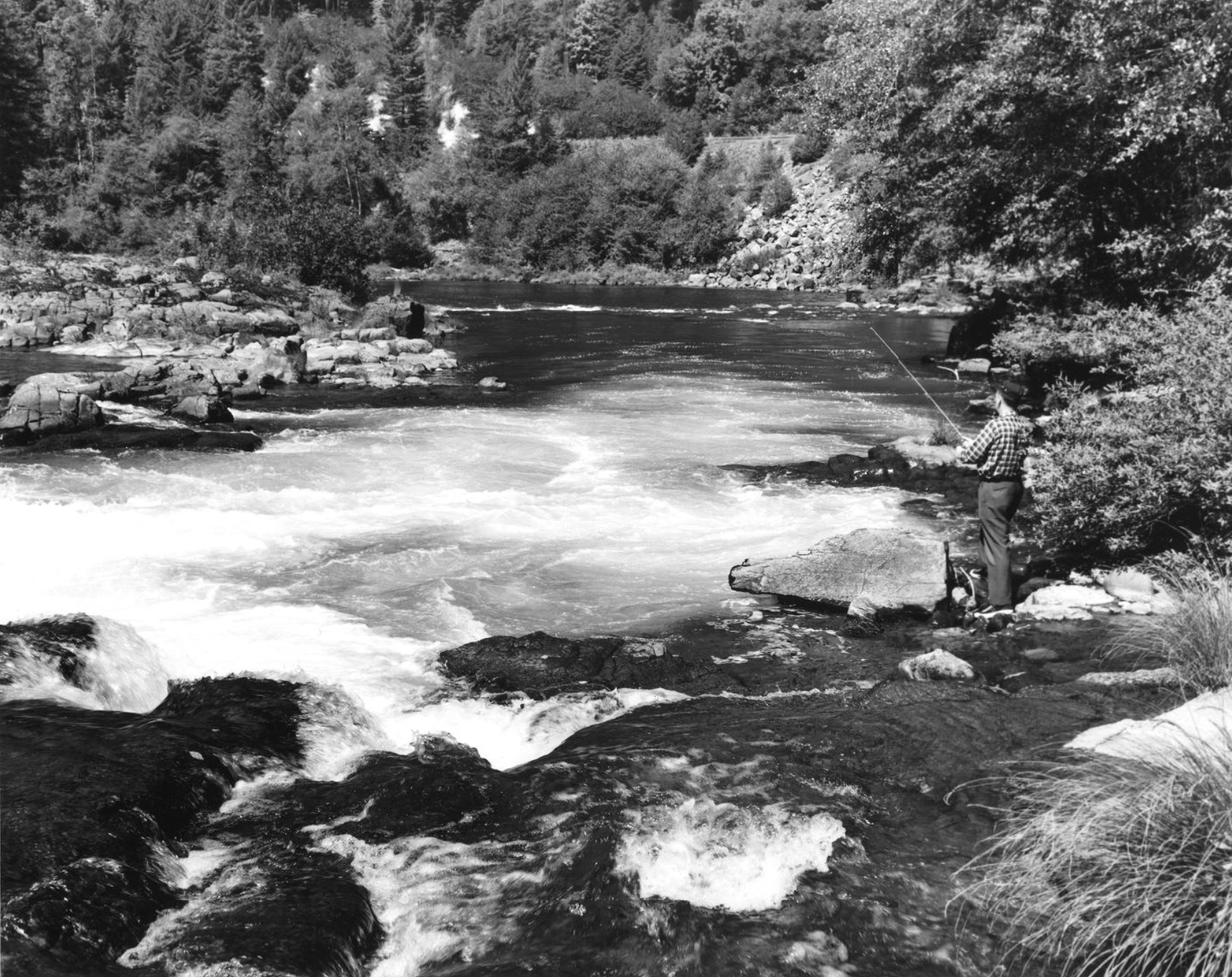
White water fishing in the North Umpqua River circa 1955 | Photo: OSU Special Collections & Archives Research Center, Oregon State University
Establishment of Hatchery Facilities (1920’s)
The first trout hatchery on what would become the Rock Creek site was constructed in 1920, at a time when hatchery propagation across Western states was expanding. This early facility predated the main state-run hatchery and represented grassroots and locally driven interest in rearing fish for angling and harvest.
In 1925, the modern Rock Creek Hatchery was formally established across the North Umpqua River from that 1920 trout site. Operated by what is now the Oregon Department of Fish and Wildlife (ODFW), this became one of the oldest continuously operating hatcheries in Oregon.
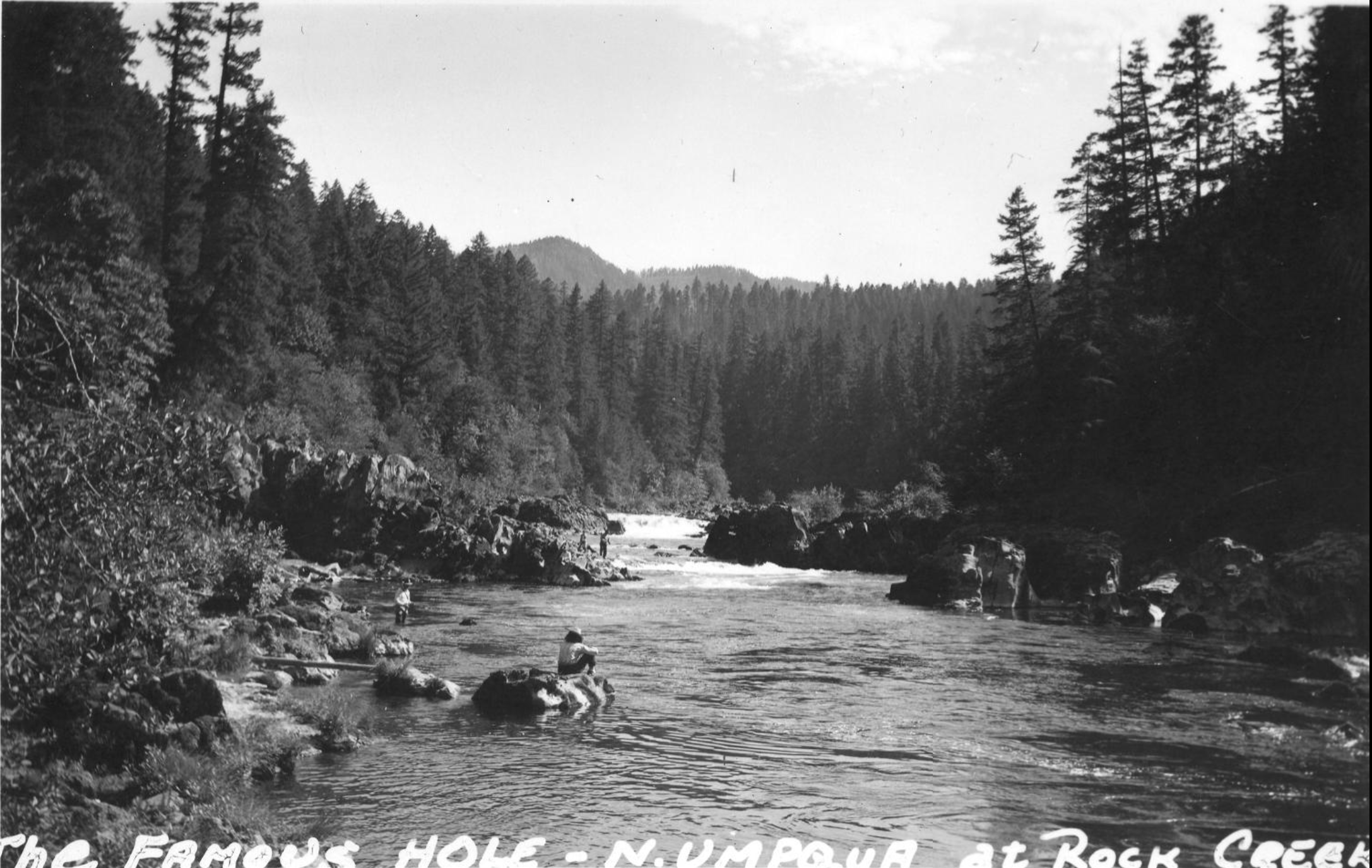
The famous hole was located on the North Umpqua River at Rock Creek, ca. 1940 | Photo: OSU Special Collections & Archives Research Center, Oregon State University
Growth and Program Expansion (1930’s - 1960’s)
Over the ensuing decades, Rock Creek Hatchery expanded both its infrastructure and species portfolio. Originally focused on salmonids such as rainbow trout and Chinook, the hatchery incorporated additional concrete raceways and broodstock handling facilities by mid-century, reflecting the broader scale of hatchery production during this period of fisheries management. By the 1960s, production included spring and fall Chinook salmon, coho salmon, steelhead, and rainbow trout, intended for harvest fisheries.
However, the ecological impacts of hatchery production on wild fish populations were already a subject of debate. Some fisheries scientists and conservation groups began raising concerns that hatchery fish could compete with or genetically dilute wild stocks, a topic that would gain prominence in later decades.
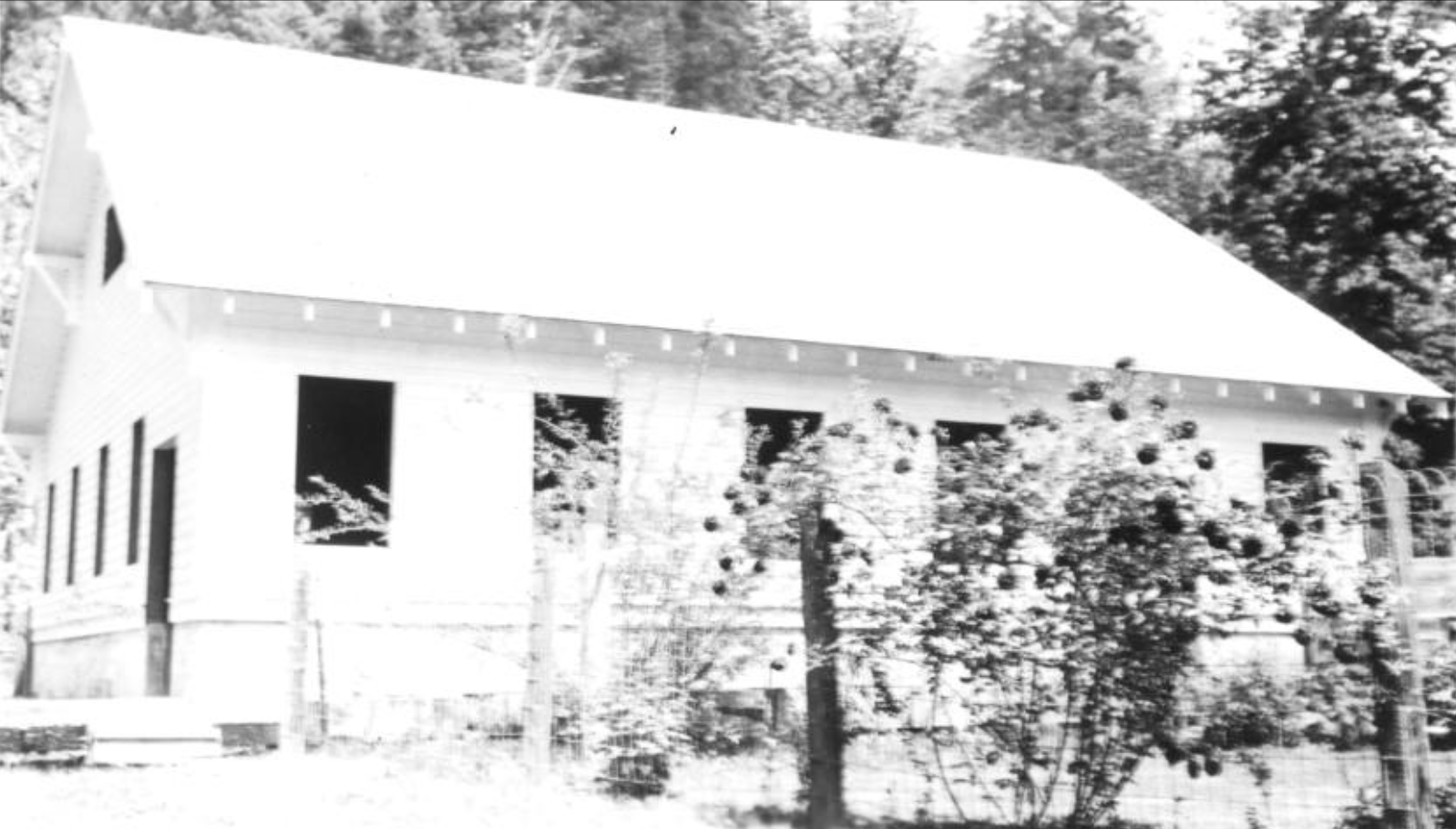
Rock Creek Hatchery building circa 1930 | Photo: Gerald W. Williams Collection, Oregon State University.
Challenges and Changes (1970’s - 1980’s)
By the 1970s, the hatchery faced environmental and operational challenges. Low stream flows and high water temperatures from decades of extensive clearcut timber harvest and road construction in the Rock Creek watershed led to a temporary closure of the facility in 1975. These conditions highlighted the vulnerability of relying on natural stream sources for hatchery water supplies amidst environmental variability.
Following reconstruction and modernization, Rock Creek Hatchery reopened in 1979 with updated infrastructure and protocols. Raceways were expanded, and improvements in broodstock collection and rearing led to increased production capacities. Upgrades over time included additional concrete rearing channels and later, facilities designed to accommodate evolving hatchery genetic management practices.
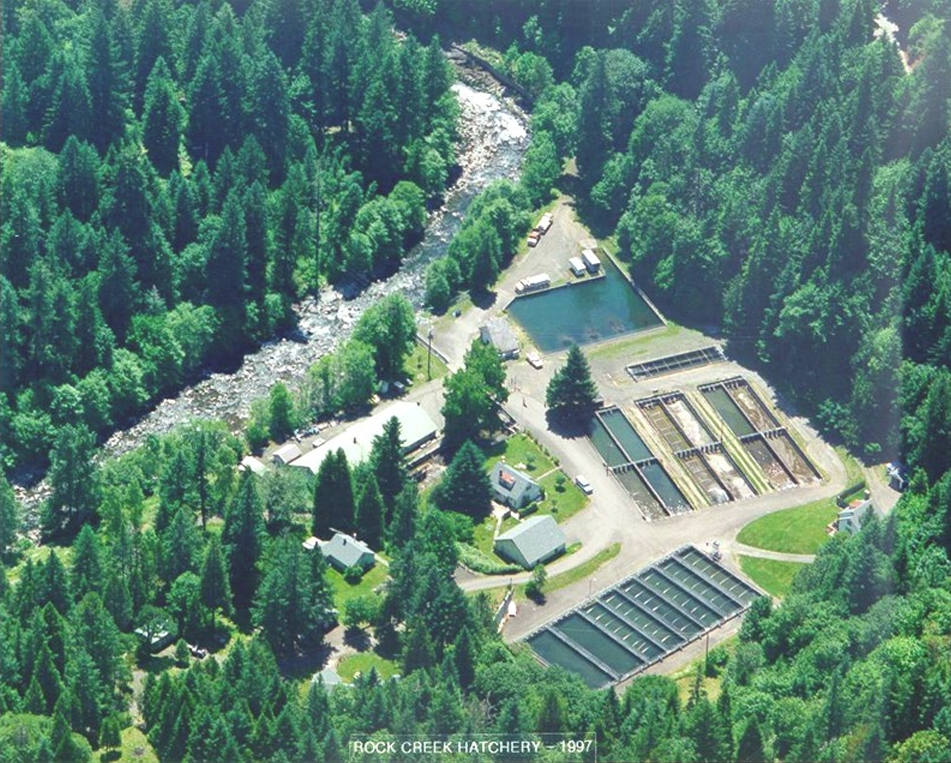
Rock Creek Hatchery in 1997 | Photo Credit: ODFW
Fish Passage Improvements and Program Complexity (2000s–2010s)
In 2012, a significant investment was made in fish passage infrastructure at Rock Creek: a fish ladder and viewing window were completed, enabling improved fish inventorying and a trapping facility that supported more efficient adult collection for broodstock. These upgrades were consistent with broader regional efforts to facilitate upstream passage and integrate hatcheries with monitoring objectives.
Throughout this era, hatchery production at Rock Creek remained diverse, producing multiple salmonid species for release into the North Umpqua and other basins. Chinook and coho salmon were cultivated for both in-river harvest and stock enhancement programs, while rainbow trout were raised for stocking in regional waters. Summer steelhead programs also continued as key components of Rock Creek’s operational portfolio. The North Umpqua shifted to all wild winter steelhead management when they stopped the winter hatchery program in 1993, leading to these fish becoming arguably Oregon’s healthiest coastal steelhead population.
Wildfire Destruction and Shifting Management (2020’s)
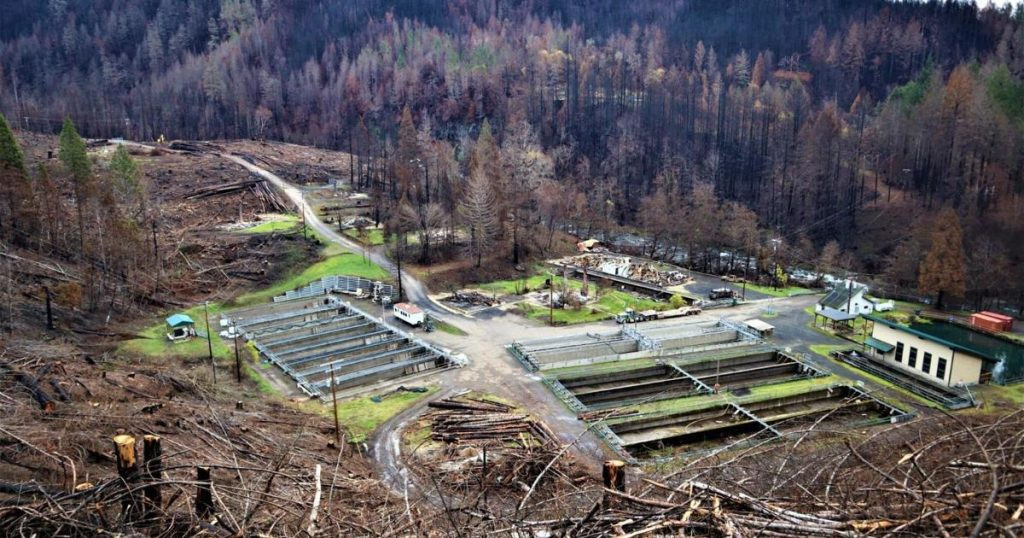
The trajectory of Rock Creek Hatchery shifted dramatically with the 2020 Archie Creek Fire, which burned over 125,500 acres of forested landscape, including the Rock Creek drainage. The fire destroyed the hatch house, on-site residences, and support buildings, effectively ceasing traditional hatchery operations at the site.
In the wake of this loss, fish culture at Rock Creek has continued in modified forms. Some broodstock collection and egg incubation activities shifted to other facilities, and fertilized eggs from North Umpqua runs have been reared elsewhere before returning for release. Production post-fire has focused on a reduced suite of species—primarily spring Chinook, summer steelhead, and rainbow trout—with adults transferred off-site for spawning.
Rock Creek Hatchery after the 2020 Archie Creek Fire | Photo: ODFW
Contemporary Policy Debates and Conservation Perspectives
The damage to the hatchery has amplified existing debates about the role of hatcheries in salmonid management, particularly concerning wild North Umpqua steelhead. In 2021–2022, a coalition of conservation organizations, including the Native Fish Society advocated for a pause in the North Umpqua summer steelhead hatchery program as a conservation measure, recognizing low wild summer steelhead returns and adverse interactions with hatchery fish.
In April 2022, the Oregon Fish and Wildlife Commission, after considerable testimony from tribes, anglers, and fisheries scientists on both sides of the issue, voted to end the hatchery’s summer steelhead program—marking the conclusion of a long-standing production effort at Rock Creek.
Some legal and administrative actions have since unfolded around that decision, including injunctions and ongoing court actions affecting the future of hatchery releases and management in the basin. Since 2024 the North Umpqua has been managed for all wild summer and winter steelhead.
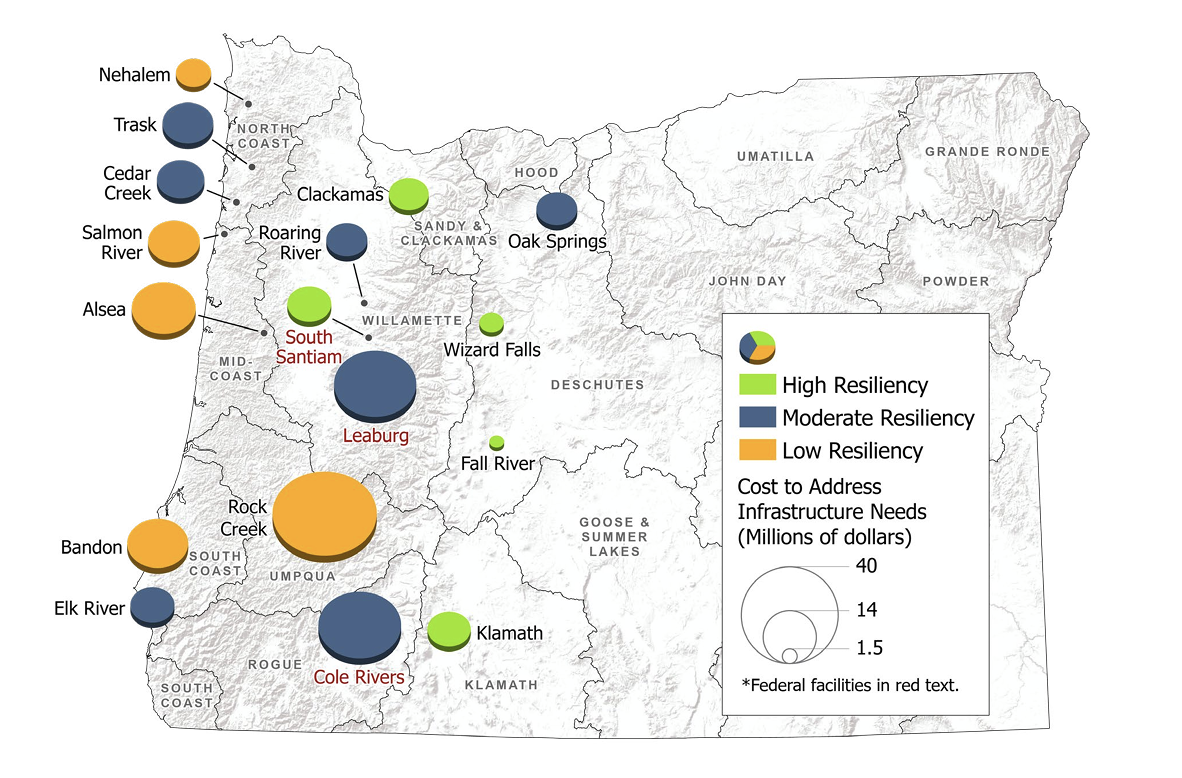
In the 2023 Oregon legislative session, Native Fish Society supported a Hatchery Resiliency Assessment that was a legislatively-mandated, comprehensive review of the state’s 14 state-owned hatchery facilities, examining their operational sustainability, infrastructure needs, climate vulnerability, ecological impacts, and economic performance. This multi-year study, involving third-party contractors and public engagement, evaluated factors such as rising operational costs, deferred maintenance backlogs, climate resilience challenges (e.g., water temperatures and wildfire risks), and the broader benefits and risks of hatchery production in Oregon’s watersheds. It highlighted systemic pressures on the hatchery system and provided a baseline “state-of-the-system” understanding to inform future investment decisions, including regulatory compliance and public values around conservation and hatchery roles.
In the North Umpqua River basin, the assessment placed Rock Creek Hatchery among the most vulnerable and costly facilities relative to others in the state system, particularly due to its severe wildfire damage in 2020, challenging site conditions, water temperature issues, and high cost per fish produced. Pre-fire performance data used in the evaluation ranked Rock Creek at the bottom of statewide hatcheries.
Graphic showing Rock Creek Hatchery ranked as the Lowest Resiliency and highest cost to address from the ODFW Hatchery resiliency Assessment | Source: ODFW
As of 2026, Rock Creek Hatchery stands at a crossroads—its physical infrastructure diminished by wildfire, and its purpose evolving in a management context increasingly shaped by native fish conservation goals. Many in the conservation community see this as an opportunity to reimagine how hatchery science and wild fish restoration intersect, especially in a watershed long celebrated for its wild steelhead and salmon runs.
Rock Creek Hatchery’s story shouldn’t end as a fight over the past. It needs to be about making a decision to put old, ineffective policies behind us, and look towards the future, a future where we invest in what works best for Oregon’s fish, environment, and taxpayers. The decision on whether the state should pour millions of dollars into hatchery infrastructure at Rock Creek isn’t a referendum on hatchery policy. It’s a practical question of rebuilding costs, climate risks, and how Oregon best utilizes taxpayer dollars.
Thankfully, Oregon already has a proven, homegrown Recipe for Abundance, proven by our Coastal Coho experience. We can implement policies that work: invest in healthy rivers, strengthen monitoring and sustainable fisheries, and rely on self-sustaining native fish.
In a tight-budget era, the smart path is spend smarter, not bigger. We can prioritize existing dollars toward restoration and monitoring that create local jobs, protect clean water, and reduce wildfire and flood risk. The future of Rock Creek is about choosing a forward-looking blueprint that delivers a better return for all Oregonians, stronger local economies, and resilient rivers that can support fishing opportunities for generations.
~~~~~~~~~~~~~
Through our Winchester Dam Removal and All-Wild North Umpqua campaigns, Native Fish Society will continue working toward a future where this river once again sets the standard for the revival of wild, native fish, free-flowing rivers, and thriving local communities.
Stay tuned for next month’s North Umpqua Notes, where we’ll continue to explore the currents shaping the river’s wild future - from habitat projects and policy shifts, to community partnerships, restoration success stories, and more!
If you have questions or ideas for topics you’d like to see featured in North Umpqua Notes, we’d love to hear from you! Send your thoughts to NFS Southern Oregon Coordinator Charles Gehr at charles@nativefishsociety.org, or learn more about our North Umpqua Campaigns here:
You're Invited to our BIG Homewaters: Run Wild Benefit Banquet and Auction on April 4th!
Join Us for a Guaranteed Good Time for a Great Cause! You're invited to join us on an amazing journey into the future of abundance at our 30th Anniversary Benefit Banquet and Auction!
When: Saturday, April 4th, 2026 | 5pm - 9pm |
Where: The Loft at 8th Avenue - Portland, OR |
What: A banquet and auction supporting the revival of wild, native fish, free-flowing rivers, and thriving local communities. Tickets on sale now!