As WaterWatch of Oregon explains in their press release: "The ruling in the contested case came after dam owners Winchester Water Control District chose to fight, rather than to comply with a September 2024 ODFW proposed order requiring demolition of the old and inadequate north side fish ladder and construction of new and improved fish passage facilities on the south end of the dam, nearer to the natural travel corridor for native migratory fish. Construction of legally compliant fish passage at the dam is expected to cost upwards of $70 million."
You can read WaterWatch’s full press release here:
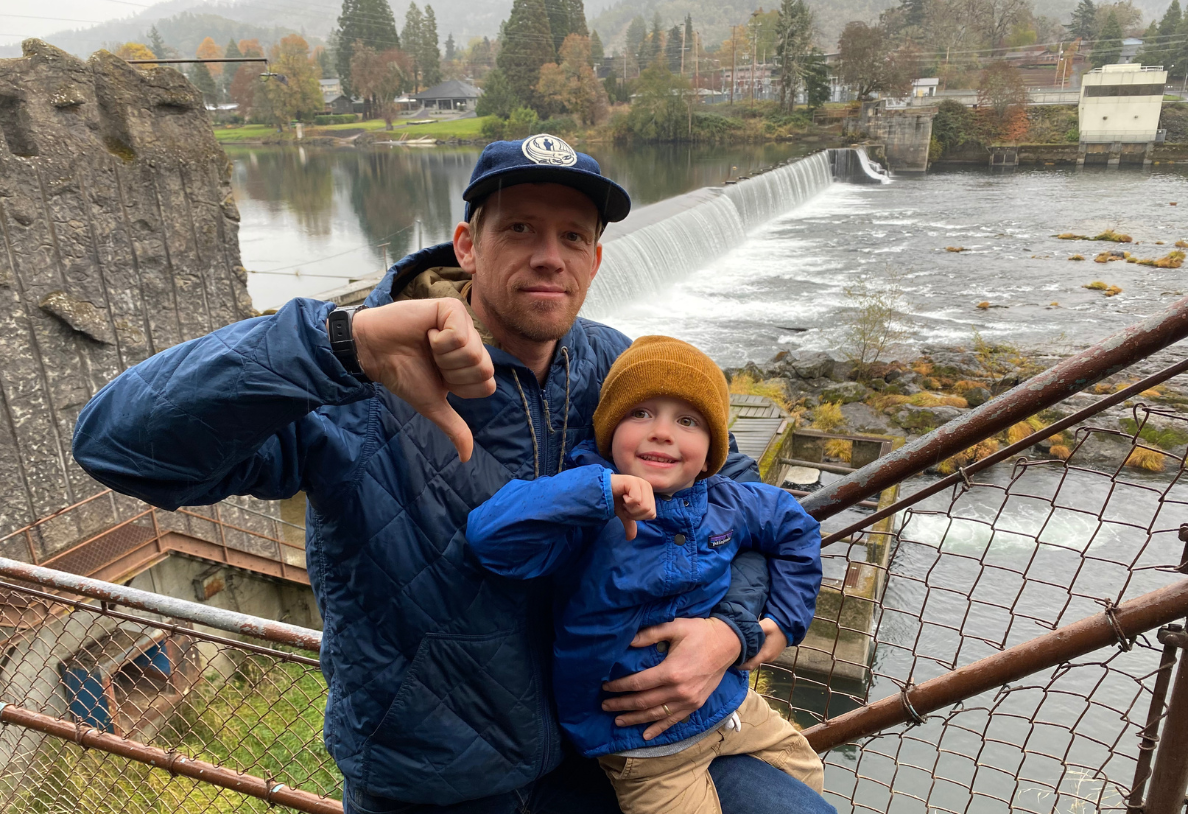
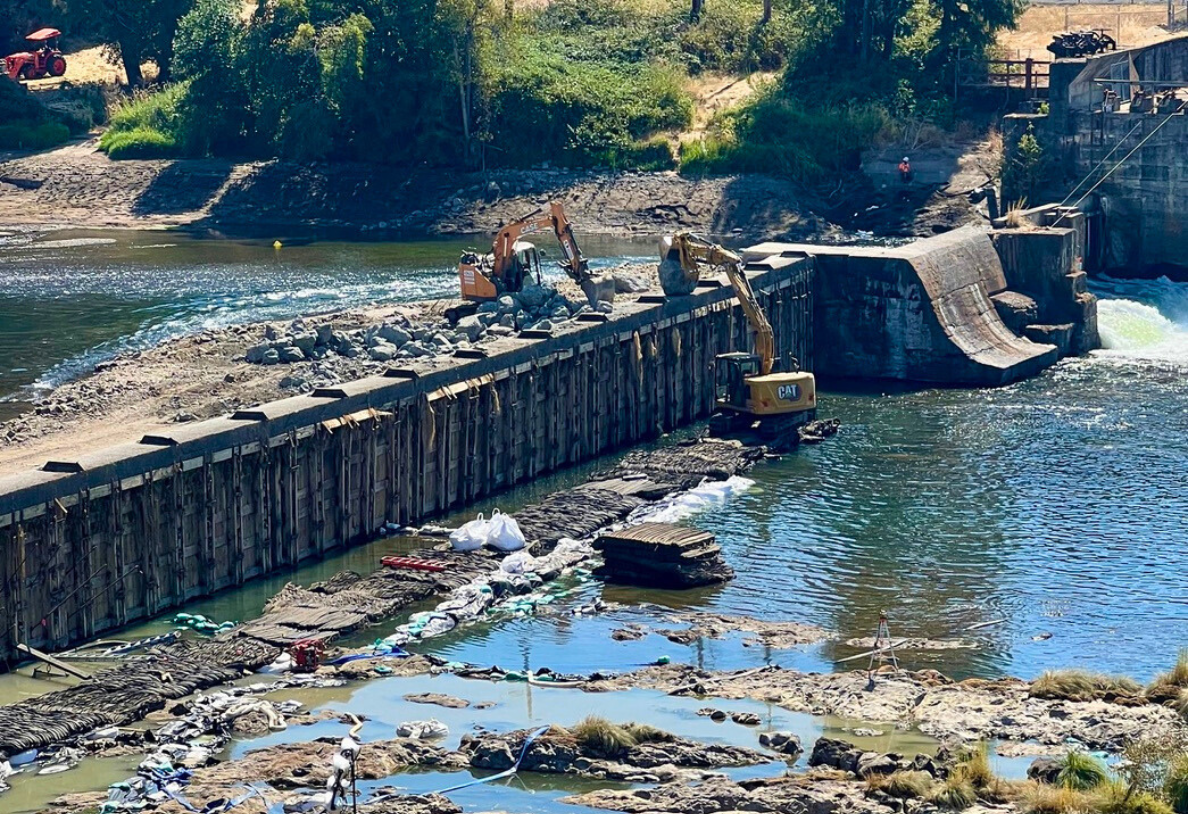
Winchester Dam is a derelict 130-year-old structure that blocks access to more than 160 miles of high-quality, cool upstream habitat for North Umpqua salmon and steelhead. The dam’s existing fish ladder is outdated and ineffective - even located on the wrong side of the river - and poses ongoing risks to migrating fish due to hazardous passage infrastructure.
Under this ruling, dam owners must remove the existing, inadequate fish ladder and construct new fish passage facilities that meet state standards by 2028.
Winchester Dam is a 130-year-old structure that blocks access to more than 160 miles of high-quality habitat upstream | Photo: Kirk Blaine
Strengthening the Case for Removal
While the decision requires new fish passage rather than dam removal, it does significantly strengthen the case for the better long-term solution to fully remove Winchester Dam. The estimated cost of constructing compliant fish passage - upwards of $70 million - highlights how impractical and inefficient it is to keep propping up a structure that serves no public benefit, provides no flood control, hydropower, or water supply, and exists solely to maintain a private reservoir for a small group of landowners.
For years, Native Fish Society and other conservation partners have supported sustainable solutions that would restore a free-flowing river while minimizing costs and risks. Those offers were rejected. This ruling makes clear that the status quo is no longer acceptable and that real accountability is overdue.
We will continue to stay engaged, track developments, and keep you informed as this process moves forward - because a free-flowing, all-wild North Umpqua River is within reach.Stay tuned!
You're Invited to our BIG Homewaters: Run Wild Benefit Banquet and Auction on April 4th!
Join Us for a Guaranteed Good Time for a Great Cause! You're invited to join us on an amazing journey into the future of abundance at our 30th Anniversary Benefit Banquet and Auction!
When: Saturday, April 4th, 2026 | 5pm - 9pm |
Where: The Loft at 8th Avenue - Portland, OR |
What: A banquet and auction supporting the revival of wild, native fish, free-flowing rivers, and thriving local communities. Tickets on sale now!